YOUR TRUSTED SOURCE FOR HYPNOSIS, HYPNOTHERAPY AND PERSONAL GROWTH INSIGHTS


Conversational Hypnosis: How Milton Erickson Could Hypnotize You Without You Ever Knowing
He never used a watch. Never counted backwards. Never said 'you are getting sleepy.' Yet Milton Erickson could guide anyone into a hypnotic trance through ordinary conversation — and the techniques he pioneered are reshaping leadership, sales, and human influence to this day. Do you know when someone is using them on you?
HYPNOSIS
David C
5/15/20269 min read
Conversational Hypnosis: How Milton Erickson Could Hypnotize You Without You Ever Knowing
The master of hypnosis never needed a swinging watch. Discover the art of trance through ordinary conversation — and why the most powerful influence in the world happens when you don't even realize it's occurring.
The Man Who Changed Everything
Imagine sitting across from a kindly older man in a wheelchair. He's warm, unhurried, curious about your life. He asks simple questions. Tells you a story about his grandfather's farm. Comments on how comfortable that chair must feel beneath you.
And somewhere in the middle of that perfectly ordinary conversation — you enter a hypnotic trance.
No pocket watch. No dramatic countdown. No theatrical commands to "SLEEP."
Just words, rhythm, and a genius-level understanding of how the human mind actually works.
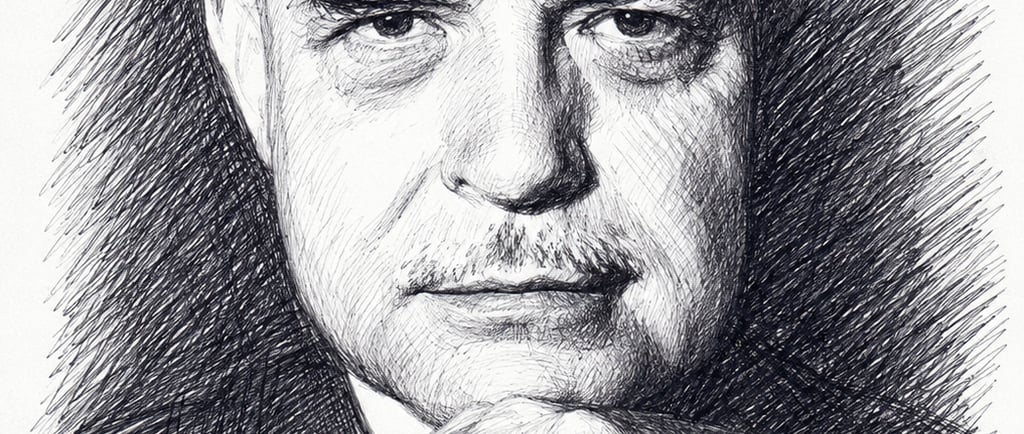
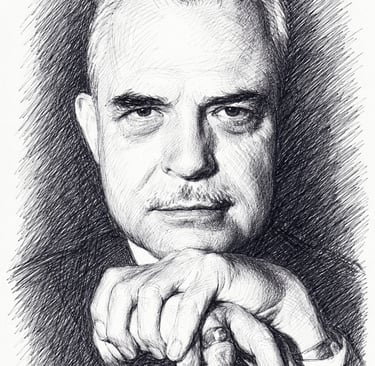
This was Dr. Milton H. Erickson — psychiatrist, psychologist, and the most influential hypnotherapist who ever lived. A man so extraordinarily gifted at inducing trance through natural conversation that his colleagues watched him work for decades and still couldn't fully explain what he was doing.
Today, his techniques form the foundation of:
- Modern clinical hypnotherapy
- Neuro-Linguistic Programming (NLP)
- Advanced sales and negotiation psychology
- Elite leadership communication
- Behavioral change therapy worldwide
The uncomfortable truth? These techniques are being used on you every day — in boardrooms, in marketing, in politics, in relationships — by people who may not even know they're doing it.
Understanding how Erickson worked isn't just fascinating. For leaders, communicators, and anyone who influences others — it's essential.
Who Was Milton Erickson?
Born in 1901 in rural Nevada, Milton Erickson's relationship with the human mind began not in a university lecture hall but in a sickbed.
At age 17, he contracted polio so severely that doctors told his family he would not survive the night. He did survive — but was left almost entirely paralyzed, able to move only his eyes.
What followed was one of the most remarkable acts of self-directed neurological rehabilitation in medical history.
Lying completely still, unable to move, Erickson spent months doing one thing: observing.
He watched how people communicated. How their bodies moved when they said one thing but meant another. How the same words produced completely different responses depending on tone, rhythm, and timing. How his own mind created vivid physical sensations simply through focused imagination.
He taught himself to walk again — through mental rehearsal alone — at a time when neuroscience hadn't yet confirmed that the brain cannot distinguish between a vividly imagined experience and a real one.
By the time he completed his medical training, Erickson understood human communication at a level his contemporaries couldn't access — because he had studied it from the inside, with nothing else to do, for years.
He went on to become:
- Founding President of the American Society of Clinical Hypnosis
- Editor of the American Journal of Clinical Hypnosis
- The subject of study by Gregory Bateson, Margaret Mead, Jay Haley, and the founders of NLP
When he died in 1980, he left behind a legacy that continues reshaping psychology, communication, and leadership development today.
[Milton H. Erickson Foundation](https://www.erickson-foundation.org)
[American Society of Clinical Hypnosis — Erickson's Legacy](https://www.asch.net)
The Revolutionary Idea That Changed Hypnosis Forever
Before Erickson, hypnosis operated on a simple, authoritarian model.
The hypnotist was the authority. The subject was passive and compliant. You issued direct commands — "You are getting sleepy... your eyes are heavy... you WILL feel no pain" — and the subject either responded or was labeled "unhypnotizable."
Erickson thought this was completely backwards.
His revolutionary insight was this:
> "Trance is not something the hypnotist does to the subject. Trance is a natural state that every human being enters dozens of times per day — and the hypnotist's job is simply to recognize and utilize it."
Think about the last time you were driving a familiar route and arrived at your destination with no memory of the journey. Or became so absorbed in a book that someone had to call your name three times. Or got lost in a daydream so vivid that real time disappeared.
That was trance. Naturally occurring, effortlessly entered, requiring no special technique.
Erickson's genius was recognizing that trance wasn't an exceptional state requiring dramatic induction — it was the natural byproduct of focused attention, and conversation was the most elegant vehicle for creating it.
The Core Techniques of Ericksonian Conversational Hypnosis
1. Therapeutic Metaphor & Storytelling
Erickson almost never addressed a patient's problem directly. Instead, he told stories.
Stories about farmers planting seeds. About rivers finding their way around obstacles. About his grandson learning to walk. Stories that seemed to have nothing to do with the presenting issue — and everything to do with it at the subconscious level.
Why this works neurologically:
The conscious mind evaluates direct suggestions critically. When a therapist says "You should feel less anxious," your conscious mind immediately constructs counter-arguments: "But what about the deadline? What about what she said? What if I fail?"
But when the same message arrives embedded in a story, the critical faculty stands down. Stories activate the default mode network — the brain's narrative processing system — which absorbs information differently, more deeply, and with dramatically less resistance.
Erickson understood this before neuroscience had the tools to confirm it. Every story he told was a precision-engineered vehicle for subconscious communication.
> "My voice will go with you."
> — Milton Erickson's famous parting words to patients
[My Voice Will Go With You — Sidney Rosen](https://www.amazon.com/My-Voice-Will-Go-You/dp/0393301354)
2. Pacing and Leading
This is perhaps Erickson's most practically applicable technique — and one that elite communicators use constantly without knowing its origins.
Pacing means meeting someone exactly where they are — matching their reality, their language, their emotional state, their worldview — before attempting to move them anywhere.
Leading means, once sufficient rapport is established through pacing, gently guiding their experience in a new direction.
In practice, it sounds like this:
"You've been working incredibly hard on this [pace]... and you've probably noticed that sometimes the harder you push [pace]... the more elusive the solution feels [pace]... and I wonder if you've ever had the experience of a breakthrough arriving just when you finally stopped forcing it [lead]..."
The listener keeps nodding through the pacing — because every statement matches their experience exactly — and by the time the leading statement arrives, their subconscious has already accepted it as part of the same verified sequence.
For leaders and communicators, this technique is transformative. The most common mistake in persuasion is leading before pacing — attempting to move people before they feel genuinely understood. Erickson almost always spent 80% of his time pacing and only 20% leading.
3. Embedded Commands
This is where Ericksonian hypnosis becomes genuinely extraordinary — and where most people's understanding of "suggestion" gets permanently upgraded.
An embedded command is a directive concealed within a larger, innocent sentence — delivered with a subtle vocal shift that the conscious mind doesn't register but the subconscious mind receives as a direct instruction.
Example:
"I don't know exactly when you'll begin to *feel completely confident** about this decision..."*
The outer sentence is innocuous — an expression of uncertainty. But nested inside it is a direct command: "feel completely confident." Delivered with a slight tonal shift, a fractional pause before and after, this embedded command bypasses critical evaluation entirely.
Erickson would layer multiple embedded commands within a single conversation, building cumulative subconscious influence that his patients experienced simply as a warm, helpful discussion.
In modern contexts, embedded commands appear in:
- Elite sales language (*"Many clients discover they want to move forward after our first conversation..."*)
- Political rhetoric (*"Americans are beginning to realize it's time for change..."*)
- Marketing copy (*"You deserve to treat yourself to something exceptional..."*)
- Advanced negotiation (*"I'm not sure you're ready to agree on these terms..."*)
Understanding this technique doesn't just make you a more effective communicator. It makes you a more discerning receiver of communication from others.
4. Confusion Technique
Erickson discovered something counterintuitive: confusion is one of the most powerful gateways to trance.
When the conscious mind encounters something it cannot logically process — a paradox, a non-sequitur, a rapidly shifting narrative — it temporarily suspends its critical functions while working to make sense of the input.
In that momentary suspension, the subconscious becomes wide open to suggestion.
Erickson would sometimes launch into elaborate, seemingly contradictory stories mid-session, or ask questions with no logical answer, or shift topics so rapidly that patients lost their analytical footing — and in that confused, searching state, he would deliver his core therapeutic suggestion.
In leadership contexts, masterful communicators use mild versions of this technique — reframing an unexpected angle, introducing a surprising analogy, asking a question that disrupts habitual thinking — to open audiences to ideas they would otherwise defend against.
5. The Yes Set
Before introducing any significant suggestion, Erickson would build what he called a "yes set" — a sequence of statements that the listener could not help but internally affirm.
"You came here today because you wanted things to be different [yes]... and you've tried various approaches that haven't fully worked [yes]... and there's a part of you that genuinely believes change is possible [yes]... and that part of you is exactly right [yes + embedded command]..."
By the time the critical suggestion arrives, the listener's subconscious is in full agreement mode — the mental habit of "yes" has been established — and the new suggestion rides that momentum directly into acceptance.
This technique is the foundation of virtually every elite negotiation, sales, and persuasion framework in existence today — most practitioners have simply never traced it back to its origin.
6. Future Pacing
One of Erickson's most elegant techniques involved guiding patients to vividly experience their desired future state as already real — in present tense, with full sensory detail — while in trance.
"I'd like you to imagine, some time from now, perhaps a week or a month... walking into that meeting room... and noticing how different your body feels... the steadiness in your breathing... the clarity in your thinking... the ease with which the right words simply arrive..."
The brain cannot distinguish between a vividly imagined experience and a real one. When future pacing is done with sufficient specificity and emotional engagement, the subconscious registers it as an actual memory — and begins organizing behavior to match that established "reality."
For executives, future pacing is among the most powerful performance tools available. Experiencing a successful negotiation, a confident presentation, or a breakthrough decision in trance before experiencing it in reality is not visualization — it is neurological rehearsal.
[Research: Mental Rehearsal and Neural Pathways — NCBI](https://www.ncbi.nlm.nih.gov/pmc/articles/PMC3767115/)
Why Every Leader Should Study Erickson
Erickson never intended his techniques as manipulation. His framework was built on a foundational belief:
> "Every person has within themselves all the resources they need. The therapist's job is simply to help them access what's already there."
This philosophy — that influence is about unlocking existing potential rather than implanting foreign ideas — is precisely why Ericksonian techniques translate so powerfully to ethical leadership.
Consider what a leader does every day:
- Communicates vision to people with varying beliefs and resistances
- Navigates conflict between parties with entrenched positions
- Motivates teams who are exhausted, skeptical, or afraid
- Manages change in people who are neurologically hardwired to resist it
- Builds trust with stakeholders who begin from positions of doubt
Every one of these challenges is fundamentally a challenge of subconscious influence — of reaching beneath conscious resistance to the deeper human motivations where genuine change actually occurs.
Leaders who understand Ericksonian communication principles don't just persuade better. They connect differently — at a level that produces lasting behavioral change rather than temporary compliance.
The difference between a manager who gets grudging compliance and a leader who produces genuine commitment often comes down to exactly this: one is communicating to the conscious mind; the other has learned to speak to the whole person.
Resources: Go Deeper Into Erickson's World
Essential Books
"My Voice Will Go With You" — Sidney Rosen
*Erickson's teaching tales with commentary. The most accessible entry point.*
[Amazon](https://www.amazon.com/My-Voice-Will-Go-You/dp/0393301354)
"Uncommon Therapy" — Jay Haley
*Case studies of Erickson's work. Jaw-dropping in its implications.*
[Amazon](https://www.amazon.com/Uncommon-Therapy-Psychiatric-Milton-Erickson/dp/0393310310)
"Patterns of the Hypnotic Techniques of Milton H. Erickson, M.D." — Bandler & Grinder
*The book that launched NLP. Dense, technical, and essential.*
[Amazon](https://www.amazon.com/Patterns-Hypnotic-Techniques-Milton-Erickson/dp/1555520529)
"Trance-formations" — John Grinder & Richard Bandler
*More accessible than Patterns, focused on practical application.*
"Hypnotic Realities" — Ernest Rossi & Milton Erickson
*Transcripts of actual sessions with real-time analysis.*
"The Collected Papers of Milton H. Erickson" — 4 Volumes
*The complete archive. For serious students only.*
[Erickson Foundation Press](https://www.erickson-foundation.org/publications/)
Organizations & Learning
[Milton H. Erickson Foundation](https://www.erickson-foundation.org) — Archives, training, conferences
[American Society of Clinical Hypnosis](https://www.asch.net) — Practitioner certification
[Society for Clinical and Experimental Hypnosis](https://www.sceh.us) — Research & training
[NLP Comprehensive](https://www.nlpco.com) — NLP training rooted in Ericksonian principles
Video & Audio
"The Artistry of Milton Erickson" — Rare footage of Erickson working with actual patients
[Search on YouTube: Milton Erickson Artistry](https://www.youtube.com/results?search_query=milton+erickson+artistry)
"The Art of Hypnosis" — Igor Ledochowski podcast series
[Hypnotic World](https://www.hypnoticworld.com)
Huberman Lab — "Using Hypnosis to Enhance Health and Performance"
[Huberman Lab](https://hubermanlab.com/using-hypnosis-to-enhance-health-and-performance/)
Research
[PubMed — Ericksonian Hypnosis Research](https://pubmed.ncbi.nlm.nih.gov/?term=ericksonian+hypnosis)
[International Journal of Clinical and Experimental Hypnosis](https://www.tandfonline.com/toc/hhip20/current)
The Takeaway That Changes How You See Every Conversation
After studying Erickson's work, something irreversible happens.
You start noticing trance states everywhere — in colleagues who drift slightly during a meeting, in audiences who lean forward during a great story, in yourself during a compelling podcast or a vivid conversation.
You start recognizing pacing and leading in great communicators. Embedded commands in advertising. Yes sets in negotiation. Future pacing in inspirational speeches.
And you realize that influence was never about logic or data or the strength of your argument.
It was always about connection — about the ability to speak to the whole human being, not just the rational surface they present to the world.
Milton Erickson understood this before the neuroscience existed to explain it.
The question for every leader, communicator, and person of influence is the same one his patients faced sitting across from that warm, unhurried man in the wheelchair:
Are you going to learn this language — or simply be spoken to in it without knowing?
Hashtags
Core:#MiltonErickson` `#ConversationalHypnosis` `#Hypnosis` `#EricksonianHypnosis` `#HypnoticLanguage`
Leadership & Communication:#LeadershipCommunication` `#InfluenceAndPersuasion` `#ExecutiveCommunication` `#CEOMindset` `#EliteLeadership` `#NegotiationSkills` `#PublicSpeaking` `#LeadershipDevelopment`
Psychology & Science:#NLP` `#SubconsciousMind` `#BehavioralPsychology` `#CognitivePsychology` `#Neuroplasticity` `#HumanBehavior` `#PsychologyOfInfluence` `#MindScience`
Discovery:#Persuasion` `#CommunicationSkills` `#MindHacking` `#HiddenInfluence` `#ThePowerOfWords` `#UnlockYourMind` `#HumanPotential` `#ChangeYourMind`
©2026 HypnoSyncSpace. All rights reserved.
HypnoSyncSpace is based in Bristol, United Kingdom
davidc@hypnosync.space


My name is David Chmielewski, a hypnotherapist by nature, at heart and by choice. I believe that real change starts with genuine connection. My mission is to help you sync your mind and rediscover your inner strength through compassionate, expert-led hypnotherapy.
I am qualified hypnotherapist holding a Diploma in Hypnotherapy (DHP Acc.Hyp.) and is a Full Member of the Professional Hypnotherapy Practitioner Association (PHPA), an organisation whose members are committed to high professional standards, ethical practice, and continued professional development.