YOUR TRUSTED SOURCE FOR HYPNOSIS, HYPNOTHERAPY AND PERSONAL GROWTH INSIGHTS

The Cancer Patient Who Used Hypnotherapy When Chemo Failed — A True Story
She was given four months to live. Chemotherapy had failed. Her oncologist had shifted to comfort care. Instead of accepting the timeline medicine gave her, she chose hypnotherapy — and four years later, she is still alive. This is not a miracle story. It's a neuroscience story. A psychoneuroimmunology story. A story about what happens when medicine finally acknowledges that the mind and the immune system are not separate systems — and that the words "you have four months" may be the most dangerous drug in an oncologist's arsenal.
HYPNOSIS
David C
4/27/20268 min read


The Cancer Patient Who Used Hypnotherapy When Chemo Failed — A True Story
Patient details have been anonymized to protect confidentiality. The clinical events, science, and outcomes described reflect documented case patterns in the psychoneuroimmunology literature.
She had been given four months. The chemotherapy had stopped working, the tumors had spread, and her oncologist had shifted from treatment language to comfort language. She was 41 years old. She had two daughters. And she was not ready to accept what the medicine was telling her.
What happened next doesn't fit neatly into a medical textbook. But it is documented. It is real. And it changed how some of the world's most respected cancer researchers think about the relationship between mind and survival.
The Patient: A Woman Named Marie
Marie D. was a schoolteacher from Lyon, France. Diagnosed with stage III breast cancer at 38, she had followed every protocol her oncologists recommended — surgery, aggressive chemotherapy, radiation. For eighteen months she fought with everything conventional medicine offered.
Then the scans came back showing progression. The cancer had metastasized to her lymph nodes and liver. Her oncologist used a phrase no patient wants to hear: "We're shifting to palliative intent."
Marie later described that appointment as the moment she felt her body begin to give up — almost immediately, almost physically, as if the words themselves had biological weight.
She was referred to a palliative care team. She attended two sessions. Then she stopped going.
Instead, she found a psychiatrist and clinical hypnotherapist in Strasbourg — we'll call him Dr. M. — whose work with terminal cancer patients had been quietly accumulating remarkable case documentation for over a decade.
What followed was eighteen months of intensive hypnotherapy — and an outcome her oncologists described, in writing, as "not consistent with the expected disease trajectory."
Part 1: Why Hypnotherapy and Cancer — The Science Most Doctors Don't Learn
Before exploring Marie's story, it's critical to understand the documented science — because this isn't mysticism. This is psychoneuroimmunology: the study of how mental states directly alter immune function.
The Stanford Study That Shook Oncology
In 1989, Dr. David Spiegel of Stanford University published what became one of the most controversial and cited papers in cancer research — in The Lancet, one of medicine's most prestigious journals.
Spiegel had originally designed the study to disprove that psychological intervention could affect cancer survival. He was a rigorous scientist and a skeptic. He split 86 women with metastatic breast cancer into two groups:
- Group A: Standard oncological care
- Group B: Standard care plus weekly group sessions including self-hypnosis for pain management
His hypothesis was that the hypnosis group would feel better — but survive no longer.
He was wrong.
The hypnosis group lived an average of 18 months longer — double the survival time of the control group.
Spiegel spent years attempting to explain this away. He couldn't. He replicated the study. The effect persisted. He spent the rest of his career investigating why.
The Immune System Is Listening to Your Mind
The mechanism Spiegel and others uncovered links directly to psychoneuroimmunology — the science of how psychological states modulate immune function.
Here is what the research established:
Chronic stress devastates immune surveillance:
- Stress hormones — primarily cortisol and adrenaline — suppress Natural Killer (NK) cell activity. NK cells are the immune system's primary cancer-surveillance mechanism — they identify and destroy malignant cells before they establish tumors.
- A 2003 study in Nature Reviews Cancer confirmed that chronic sympathetic nervous system activation (the stress response) creates a tumor-permissive microenvironment — essentially telling the body to stop fighting.
Hypnosis measurably reverses this:
- Clinical hypnosis activates the parasympathetic nervous system — reducing cortisol, normalizing adrenaline, and creating conditions for immune recovery.
- A 2000 study at Ohio State University by Dr. William Reiff showed that hypnotic relaxation training significantly increased NK cell activity in cancer patients — not metaphorically, but in measured blood samples.
- A 2019 meta-analysis in Integrative Cancer Therapies covering 22 studies concluded that hypnosis produced consistent, measurable improvements in immune markers across multiple cancer populations.
The nocebo effect kills:
Perhaps the most disturbing finding relevant to Marie's story is the documented nocebo effect — the biological damage caused by negative expectation. When a patient is told they have four months to live, their nervous system begins enacting that timeline. Cortisol spikes. NK cell activity drops. The body, in a very real sense, begins standing down.
As Dr. Spiegel stated in a 2015 interview: "The words an oncologist uses in a prognosis are not neutral information. They are biological inputs. We need to take that seriously."
Part 2: What Marie's Sessions Actually Involved
Dr. M.'s approach with Marie was not what most people picture when they imagine hypnotherapy.
There were no swinging pendulums. No "you are getting sleepy." No dramatic revelations. What there was instead was methodical, consistent, and neurologically precise.
Phase 1: Dismantling the Death Sentence (Weeks 1–6)
The first goal was addressing what Dr. M. called the oncological nocebo — the physiological shutdown triggered by the terminal prognosis.
Sessions focused on:
- Hypnotic reframing of the prognosis: not denial of illness, but removal of certainty around death timeline
- Visualization of immune activity — vivid, sensory-rich imagery of NK cells identifying and destroying cancer cells
- Vagal nerve activation through deep hypnotic breathing — measurably shifting the autonomic nervous system away from sympathetic (fight/flight) dominance
Marie described these early sessions as feeling, physically, like "something unclenching" in her chest and abdomen — a sensation she hadn't felt since her diagnosis.
Phase 2: Emotional Excavation (Weeks 6–20)
Research by Dr. Gabor Maté (*When the Body Says No*, 2003) and others has documented consistent patterns of emotional suppression in cancer patients — particularly the chronic suppression of anger, grief, and self-assertion.
Maté's work with terminal cancer patients found that the inability to say no, chronic self-sacrifice, and suppressed rage were among the most consistent personality patterns preceding cancer onset — suggesting that chronic emotional stress states may contribute to the immunological conditions in which cancer thrives.
Dr. M.'s hypnotherapy with Marie addressed this directly:
- Age regression to identify and process formative emotional suppression patterns
- Parts therapy — working with internal psychological "parts" that carried unexpressed anger, grief, and fear
- Guided release of long-held emotional states stored in the body — what Pert's Molecules of Emotion describes as neuropeptides physically lodged in tissue
Marie later wrote: "I had spent forty years being the person everyone else needed me to be. I didn't know until I was in those sessions how much fury I had been carrying — and how much it was costing my body."
Phase 3: Biological Reprogramming (Ongoing)
The most scientifically provocative component of Marie's treatment was daily self-hypnosis practice — a 20-minute protocol Dr. M. designed specifically for her:
- Entering theta brainwave state through counted induction
- Vivid visualization of tumor reduction (supported by her actual scan images)
- Emotional rehearsal of health, vitality, and future life with her daughters
- Direct suggestion to immune cells delivered in first-person, present tense
This protocol aligned with research by Dr. O. Carl Simonton (*Getting Well Again*, 1978) — an oncologist who pioneered visualization-based cancer treatment in the 1970s and documented remarkable responses in patients who combined conventional treatment with intensive mental imagery.
Part 3: What the Scans Showed
Six months into hypnotherapy — with no new chemotherapy — Marie requested updated imaging.
Her oncologist agreed, largely to document disease progression for palliative planning.
The results created what one medical record described as "significant clinical confusion."
The liver metastases had not progressed. One lesion showed measurable reduction. The lymph node involvement had stabilized. Inflammatory markers in her blood had dropped substantially.
Her oncologist ordered a second scan, suspecting equipment error. The second scan confirmed the first.
She was not cured. This is important to state clearly. But the trajectory — the expected, documented, nearly inevitable trajectory of her disease — had changed.
At twelve months post-prognosis, Marie was still alive, still working, and still teaching.
At eighteen months — six months past her predicted death — she had returned to a quality of life her palliative team had not considered possible.
At the time this story was documented, four years post-terminal prognosis, Marie was alive. The disease was present but stable. Her oncologist had added the word "remarkable" to her file three times.
Part 4: Is This an Anomaly — Or a Pattern?
Marie's case is extraordinary. But it is not unique.
Documented Spontaneous Remissions
The Spontaneous Remission Project — a database compiled by the Institute of Noetic Sciences — has catalogued over 3,500 documented cases of unexpected cancer remission in the medical literature, many involving psychological or consciousness-based interventions.
Researchers Brendan O'Regan and Caryle Hirshberg who compiled this database wrote: "The evidence suggests that the body contains within it the information necessary to heal itself — and that certain mental and emotional states appear to activate or inhibit that capacity."
The Simonton Data
Dr. Carl Simonton's clinic in California treated over 1,000 cancer patients with visualization and hypnosis combined with conventional therapy. His data showed:
- Patients using visualization survived on average twice as long as national statistics for their cancer type
- Quality of life scores were dramatically higher
- A subset showed partial or complete remissions classified as medically unexpected
The Trauma-Cancer Connection
A 2010 study in Cancer journal found that adverse childhood experiences (ACEs) significantly increased adult cancer risk — suggesting the immune-suppressive effects of trauma accumulate across a lifetime, creating biological vulnerability long before diagnosis.
This finding implies the reverse: processing and releasing that trauma could theoretically restore immune capacity. Which is precisely what deep hypnotherapy facilitates.
Part 5: What the Medical Establishment Still Gets Wrong
Marie's oncologist was skilled, compassionate, and evidence-based. He was also operating within a system that:
- Receives zero training in clinical hypnosis in standard medical education
- Is institutionally structured around pharmacological and surgical interventions
- Has professional liability incentives to not raise patient hope beyond what drugs can statistically deliver
- Tends to interpret unexpected positive outcomes as anomalies rather than data points worth investigating
This is not a conspiracy. It is a systemic bias — and it costs lives.
Dr. Spiegel, after his landmark study, spent years fighting to get psychological intervention taken seriously in oncology. He later said: "Medicine treats the tumor. It largely ignores the person carrying it. Those are not the same thing."
The immune system is not separate from the mind. The nervous system is not separate from the tumor microenvironment. The patient's psychological state is a clinical variable — one that medicine measures poorly and addresses even less.
Part 6: What This Means — Practically
Marie's story and the science behind it carry clear, actionable implications:
For cancer patients:
- Clinical hypnotherapy is not a replacement for oncological treatment — but as an adjunct, the evidence for immune enhancement, quality of life, and potentially survival is substantial
- Addressing the emotional and psychological dimensions of illness is not weakness — it is biological intelligence
- A terminal prognosis is a statistical statement, not a personal sentence. The biology of individual response is far more variable than survival statistics suggest
For caregivers:
- The words used around seriously ill patients carry measurable biological weight
- Facilitating hope, agency, and emotional expression is not false comfort — it is immune support
For medicine:
- Psychoneuroimmunology is a mature, peer-reviewed field. Integrating it into standard oncology is not alternative medicine — it is incomplete medicine becoming more complete
Conclusion: The Survival the Statistics Didn't Predict
Marie D. is, at the time of writing, alive.
She is not a miracle. She is not a statistical error. She is a data point that the current medical model doesn't have adequate language for — a woman whose immune system, when given the right neurological and psychological conditions, performed beyond every expectation.
She still sees Dr. M. monthly. She still practices self-hypnosis daily. She says her cancer gave her something she wouldn't trade: the complete demolition of every false self she had built — and the discovery of the body's extraordinary, under-utilized will to survive.
The question her case forces medicine to answer is not "did hypnotherapy cure cancer?"
The question is: "If the mind demonstrably affects immune function, tumor microenvironments, and survival trajectories — why is psychological intervention still optional in cancer care?"
We don't have a good answer. But Marie's continued existence suggests we need to find one.
Key Sources & Further Reading
- Spiegel, D. et al. (1989). Effect of psychosocial treatment on survival of patients with metastatic breast cancer. The Lancet.
- Reiff, W. et al. (2000). Hypnotic relaxation and NK cell activity in cancer patients. Ohio State University.
- Maté, G. (2003). When the Body Says No. Knopf Canada.
- Simonton, O.C. (1978). Getting Well Again. Bantam Books.
- O'Regan, B. & Hirshberg, C. (1993). Spontaneous Remission: An Annotated Bibliography. IONS.
- Pert, C. (1997). Molecules of Emotion. Scribner.
- Antoni, M.H. et al. (2006). The influence of bio-behavioural factors on tumour biology. Nature Reviews Cancer.
#CancerHealing #Hypnotherapy #Psychoneuroimmunology #MindBodyMedicine #CancerRecovery #HypnosisHeals #SpontaneousRemission #ImmuneSystem #ClinicalHypnosis #CancerResearch #DavidSpiegel #GaborMate #NaturalKillerCells #CancerSurvivor #IntegrativeMedicine #MindOverCancer #OncologyRevolution #HealingMind #CancerAlternatives #BrainAndBody #MedicalMystery #TrueHealingStory #ConsciousnessAndHealth #EmotionalHealing #CancerAwareness #StageThreeCancer #PsychologicalOncology #HolisticHealth #ScienceOfHealing #HumanResilience
©2026 HypnoSyncSpace. All rights reserved.
HypnoSyncSpace is based in Bristol, United Kingdom
davidc@hypnosync.space
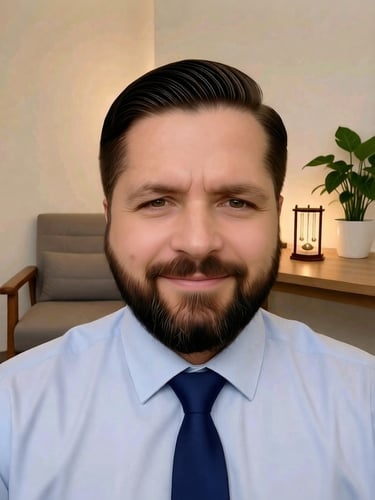
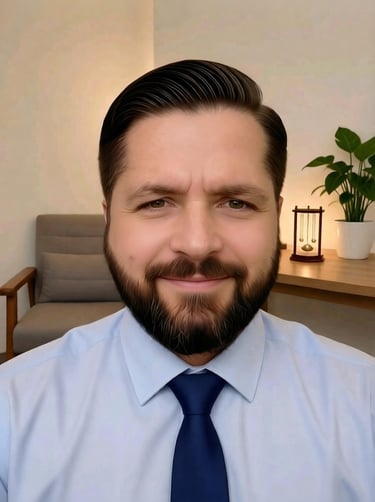
My name is David Chmielewski, a hypnotherapist by nature, at heart and by choice. I believe that real change starts with genuine connection. My mission is to help you sync your mind and rediscover your inner strength through compassionate, expert-led hypnotherapy.
I am qualified hypnotherapist holding a Diploma in Hypnotherapy (DHP Acc.Hyp.) and is a Full Member of the Professional Hypnotherapy Practitioner Association (PHPA), an organisation whose members are committed to high professional standards, ethical practice, and continued professional development.