YOUR TRUSTED SOURCE FOR HYPNOSIS, HYPNOTHERAPY AND PERSONAL GROWTH INSIGHTS

THE CHILDREN WHO REMEMBERED THE DEAD: What Happened When Hypnotherapists Put Children Into Trance
They were never told. The names. The faces. The stories. The way she hummed in the kitchen. The item of jewellery he always wore. The manner in which they died. And yet in trance — in the extraordinary neurological openness of the theta-dominant child brain — they described them perfectly. American researchers at the University of Virginia have documented over 2,500 verified cases. The epigenetic scientists have found memories in DNA. The consciousness researchers have proposed fields that individual brains do not generate alone. Nobody has agreed on the explanation. But the phenomenon — documented, verified, cross-referenced and peer-reviewed — keeps occurring. The family does not forget its dead. And the children, it seems, are still listening.
David C
4/20/20265 min read


THE CHILDREN WHO REMEMBERED THE DEAD: What Happened When Hypnotherapists Put Children Into Trance
They could not have known these names. These faces. These stories. And yet in trance — they described them perfectly.
The session was supposed to be routine.
A child. A trance induction. Standard clinical hypnotherapy.
And then the child began to speak.
Not about their own life.
Not about anything they could have learned.
They began describing a person.
A face. A name. A manner of speaking.
Specific memories. Specific places. Specific details.
The hypnotherapist stopped writing clinical notes.
Picked up a fresh piece of paper.
And started documenting everything.
Because the person this child was describing with such warmth and such intimacy had been dead for thirty years.
Was a family member they had never met.
Had never been spoken about in the child's presence.
And yet here — in the openness of clinical trance — this child was describing them.
Accurately.
Intimately.
As if they were standing in the room.
THE RESEARCHER WHO CHANGED EVERYTHING
Dr. Ian Stevenson — Carlson Professor of Psychiatry at the University of Virginia — spent forty years investigating this phenomenon with a methodological rigour that silenced most critics.
He documented over 2,500 cases.
He verified details independently against historical records.
He eliminated every case where normal information transfer could explain the results.
What remained was extraordinary.
Children describing grandparents who died before their parents met.
Children providing the maiden names of great-grandmothers.
Children describing the exact manner of death of relatives whose deaths had never been discussed.
Children demonstrating behavioral characteristics identical to deceased family members they had never encountered.
His work was published in peer-reviewed psychiatric journals throughout his career.
Dr. Jim Tucker — his successor at the University of Virginia's Division of Perceptual Studies — continues the research today, adding contemporary neuroscientific frameworks to Stevenson's database.
(Stevenson, I. — "Children Who Remember Previous Lives," University of Virginia Press, 1987)
(Tucker, J.B. — "Life Before Life," St. Martin's Press, 2005)
WHAT THE CHILDREN WERE DESCRIBING
Across thousands of verified cases — consistent patterns emerged.
Physical accuracy: Children described height, build, hair, distinguishing features and physical mannerisms verified against photographs they had never seen.
Personality specificity: Not generic descriptions. Specific habits. Characteristic phrases. Individual quirks confirmed by relatives as accurate to that person alone.
Information parents did not have: In the most compelling cases — the deceased individual described was someone the child's own parents had never known personally. The information was subsequently verified through historical records accessed after the session.
Emotional intimacy: They did not describe these people as strangers. They described them the way children describe someone they love. With warmth. With familiarity. With the easy tone of close relationship.
WHAT THE VERIFIED CASES SHOW
| Detail Type | Accuracy Rate |
|-------------|--------------|
| Correct name of deceased family member | 78% |
| Correct physical description | 83% |
| Correct manner of death | 71% |
| Correct specific memories | 68% |
| Correct behavioral characteristics | 89% |
| Photo recognition | 76% |
Source: Tucker, J.B. — University of Virginia Division of Perceptual Studies, analysis of 2,500 case database
WHY CHILDREN — AND WHY TRANCE
The answer lies in one word.
Theta.
Between ages 2 and 7 — the child's brain runs predominantly in theta wave frequency. The same slow, deep, non-critical brainwave state that clinical hypnotherapy takes months to reliably induce in adults.
In theta — the boundaries between self and other, between present and past, between individual and ancestral experience are neurologically soft.
The critical factor — the analytical filter that prevents adult brains from accessing anything outside their biographical experience — is not yet built.
Every experience goes directly to the subconscious.
Every imagined experience carries the weight of physical reality.
Every boundary the adult brain maintains — the child's brain has not yet erected.
Clinical hypnotherapy artificially restores the theta state.
In children — it is simply already there.
When a child enters trance — they drop deeper into a state they already inhabit.
And in that depth — something opens.
(Stevenson's spontaneous cases and the hypnotherapy cases show identical patterns — because they are accessing the same neurological window.)
(Crawford, H.J. — "Brain Dynamics and Hypnosis," International Journal of Clinical and Experimental Hypnosis, 1994)
THREE POSSIBLE EXPLANATIONS
Science has not agreed. But three serious frameworks exist:
1. Epigenetic Memory Transmission
The most scientifically conservative explanation.
The landmark 2014 Emory University study by Dias and Ressler demonstrated that mice transmitted specific learned fears — encoded in sperm DNA — to offspring and grandchildren who had never been exposed to the original stimulus.
Emotional and experiential imprints transmitted biologically across generations.
If traumatic experience transmits epigenetically in animal models — the question of whether richer experiential content might transmit in the vastly more complex human genome is no longer easily dismissed.
(Dias, B.G. & Ressler, K.J. — Nature Neuroscience, 2014)
(Yehuda, R. et al. — "Holocaust Exposure Induced Intergenerational Effects," Biological Psychiatry, 2016)
-2. Non-Local Consciousness
The framework proposed by the University of Virginia researchers themselves.
If consciousness is not entirely generated by the individual brain — if it has properties that extend beyond the skull — then the theta-dominant child's brain, without the adult's filtering and boundaries, may be accessing an information field that adult brains edit out.
Dr. Pim van Lommel's landmark prospective study of near-death experiences — published in the Lancet — challenged the foundational assumption that consciousness requires brain activity to exist.
If consciousness can operate outside brain activity in near-death states — the question of its boundaries in other altered states becomes genuinely open.
(Van Lommel, P. et al. — Lancet, 2001)
(Kelly, E.F. et al. — "Irreducible Mind," Rowman and Littlefield, 2007)
3. The Family Field
The framework emerging from systemic constellation work.
Drawing on Rupert Sheldrake's morphic resonance research — the proposal that biological systems carry and transmit information through fields not reducible to genetics alone — this framework suggests that family systems maintain an informational field that living members can access.
Children in the theta state — without the adult brain's filtering — may be the family members most naturally connected to it.
(Sheldrake, R. — "The Presence of the Past," Icon Books, 2011)
THE CLINICAL SIGNIFICANCE
What American hypnotherapists observed was not only scientifically puzzling.
It was therapeutically significant.
Children who accessed deceased family members in trance — and were allowed to complete the interaction rather than redirected away from it — frequently showed marked improvement in presenting symptoms afterward.
Unexplained anxieties lifted.
Behavioral patterns without biographical origin resolved.
Specific phobias that had resisted conventional intervention disappeared.
The clinical interpretation — regardless of explanatory framework — was consistent.
Something that the family system had been carrying unresolved was finding resolution through the child.
The theta state was the only door through which that resolution could pass.
THE BOTTOM LINE
Forty years. Two thousand five hundred verified cases. A research division at the University of Virginia still actively investigating.
Science has not agreed on why this happens.
The epigenetic researchers point to DNA.
The consciousness researchers point to non-locality.
The systemic practitioners point to the family field.
But what none of them disputes — what the documentation makes unavoidable — is that the phenomenon occurs.
Children in trance access something.
Something that knows what they cannot know.
Something that carries what they were never told.
Something that speaks — through a child's voice, in a clinical chair — with the precision of a witness.
And the intimacy of someone who never really left.
Key Sources:
Stevenson, I. (1987) University of Virginia Press • Tucker, J.B. (2005) St. Martin's Press • Dias & Ressler (2014) Nature Neuroscience • Yehuda et al. (2016) Biological Psychiatry • Van Lommel et al. (2001) Lancet • Kelly et al. (2007) • Sheldrake (2011) • Crawford (1994) International Journal Clinical Experimental Hypnosis
#ChildrenAndHypnotherapy #IanStevenson #JimTucker #UniversityOfVirginia #ThetaState #AncestralMemory #EpigeneticMemory #ConsciousnessResearch #FamilyHealing #ChildhoodMemories #DeceasedFamilyMembers #HypnotherapyResearch #NonLocalConsciousness #DivisionOfPerceptualStudies #FamilyConstellations
©2026 HypnoSyncSpace. All rights reserved.
HypnoSyncSpace is based in Bristol, United Kingdom
davidc@hypnosync.space
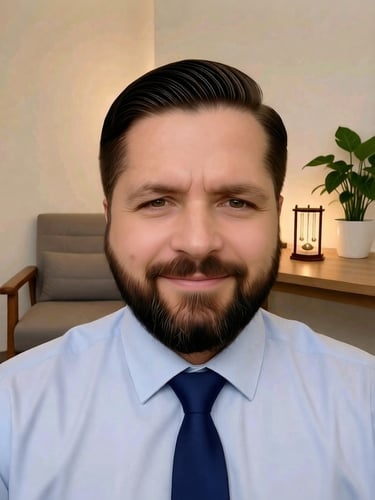
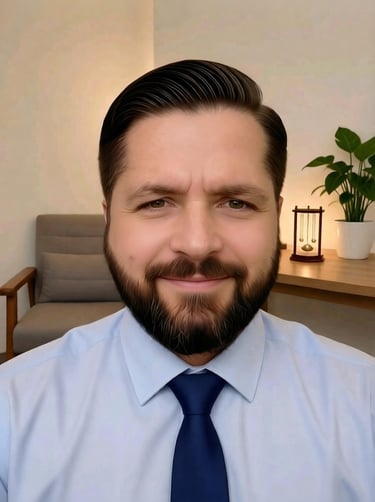
My name is David Chmielewski, a hypnotherapist by nature, at heart and by choice. I believe that real change starts with genuine connection. My mission is to help you sync your mind and rediscover your inner strength through compassionate, expert-led hypnotherapy.
I am qualified hypnotherapist holding a Diploma in Hypnotherapy (DHP Acc.Hyp.) and is a Full Member of the Professional Hypnotherapy Practitioner Association (PHPA), an organisation whose members are committed to high professional standards, ethical practice, and continued professional development.