YOUR TRUSTED SOURCE FOR HYPNOSIS, HYPNOTHERAPY AND PERSONAL GROWTH INSIGHTS

The Memory Enhancement Protocol Hypnotherapists Use With Chess Grandmasters
What if the secret advantage of chess grandmasters isn’t intelligence — but memory retrieval under pressure? Behind elite competition, some players are turning to hypnotic memory protocols designed to unlock deeper pattern recognition, pressure-proof recall, and access to unconscious strategic knowledge. This isn’t about memorizing more moves. It’s about accessing the right one at exactly the right moment. A fascinating look into the hidden intersection of chess, neuroscience, hypnosis, and peak human performance.
PERSONAL DEVELOPMENT
David C
5/16/202610 min read


The Memory Enhancement Protocol Hypnotherapists Use With Chess Grandmasters
When you can already calculate 20 moves ahead, the next frontier isn't processing power. It's the untapped memory architecture sitting beneath conscious awareness — and the hypnotherapists quietly unlocking it.
The Grandmaster's Hidden Problem
He has memorized over 100,000 chess positions. He can reconstruct any game from the 1972 Fischer-Spassky match move by move from memory. He calculates 15 to 20 moves ahead in real time under tournament pressure.
By any conventional measure, his memory is superhuman.
And yet he sits across from a hypnotherapist in a quiet Vienna office, because something is missing.
Not raw memorization capacity. Not pattern recognition speed. Not calculation depth.
What's missing is access — the ability to retrieve exactly the right pattern, from exactly the right depth of memory, at exactly the right moment under maximum competitive pressure.
Because here is the paradox that separates good chess players from great ones, and great ones from legendary ones:
The bottleneck was never storage. It was always retrieval.
And retrieval — fluid, effortless, pressure-proof retrieval of deeply encoded knowledge — is precisely where hypnotherapy operates with extraordinary precision.
This is the story of what happens when the world's most cognitively demanding game meets the world's most direct access route to unconscious memory architecture.
How Memory Actually Works — And Where Chess Players Hit the Ceiling
To understand the protocol, you first need to understand something about memory that most people — including most chess players — fundamentally misunderstand.
Memory Is Not a Filing Cabinet
The popular mental model of memory is essentially a storage system — information goes in, gets filed, and can be retrieved when needed. Under this model, better memory means bigger storage and faster search.
This model is almost entirely wrong.
Memory is not storage. Memory is reconstruction — an active, dynamic process in which the brain reassembles fragments of encoded experience into a coherent whole each time a memory is accessed.
This has profound implications:
- Memories are not fixed — they change slightly each time they are retrieved and re-encoded
- Emotional state dramatically affects retrieval — memories encoded in one emotional state are most easily retrieved in the same emotional state
- Attention at encoding determines retrieval quality — shallow encoding produces shallow, unreliable retrieval
- Interference degrades access — stress, anxiety, and competing cognitive demands actively suppress memory retrieval
For chess grandmasters, this last point is where everything breaks down.
The Pressure Problem
A grandmaster in tournament play is simultaneously managing:
- Deep calculation trees (15-20 moves ahead)
- Pattern recognition across 100,000+ memorized positions
- Time pressure (sometimes seconds per move)
- Emotional regulation under competitive stress
- Opponent psychology and behavioral reading
- Physical fatigue across 5-7 hour games
Under this cognitive and emotional load, the prefrontal cortex — the brain's executive function center — becomes progressively impaired. Cortisol floods the system. The hippocampus, critical for memory retrieval, begins underperforming.
The grandmaster knows the pattern. They've seen this exact position before. The answer is in there — encoded across thousands of hours of study and play.
But under pressure, they can't reach it.
This is the ceiling that separates the top 100 players in the world from the top 10. Not knowledge. Not intelligence. Not even calculation speed.
Retrieval reliability under maximum cognitive and emotional load.
[Research: Stress and Memory Retrieval — NCBI](https://www.ncbi.nlm.nih.gov/pmc/articles/PMC4073189/)
[Cognitive Psychology of Chess — ChessBase Research](https://en.chessbase.com/post/the-psychology-of-chess)
What Chess Grandmasters Actually Remember — The Chunking Architecture
Before exploring the protocol, we need to understand the specific memory architecture that makes chess mastery possible — because the hypnotherapy protocol is designed to work precisely within this architecture.
The Chunking Discovery
In 1973, psychologists William Chase and Herbert Simon published one of the most important studies in cognitive science — a direct investigation of how chess masters remember board positions.
Their finding was revolutionary:
Chess masters don't remember individual pieces. They remember chunks — meaningful patterns of multiple pieces that function as single cognitive units.
A novice sees 32 individual pieces on a board. A grandmaster sees perhaps 5 to 7 chunks — each chunk containing 5 to 10 pieces in a meaningful relational pattern.
This is why grandmasters can reconstruct a mid-game position after a 5-second glance — they're not memorizing 32 positions, they're memorizing 5 to 7 patterns they've seen thousands of times before.
But here's the critical finding that Chase and Simon also documented:
This chunking ability completely disappears with randomly arranged pieces.
When pieces are placed in positions that never occur in real games, grandmasters perform no better than beginners at reconstruction. Their extraordinary memory is entirely pattern-dependent — it only functions within the meaningful structure of real chess positions.
[Chase & Simon — Perception in Chess, 1973](https://www.sciencedirect.com/science/article/abs/pii/0010028573900042)
The Template Layer
Later research by Fernand Gobet and Herbert Simon identified an even deeper layer of chess memory — templates.
Templates are larger, more flexible memory structures that contain:
- A core pattern (fixed)
- Variable slots (positions that can be filled with different pieces)
- Associated strategic plans and tactical motifs
- Emotional and experiential tags from games where the template appeared
A grandmaster's memory isn't just a library of static positions. It's a dynamic network of templates — each one connected to strategic knowledge, tactical patterns, emotional memories of games, and procedural knowledge about how to play from that structure.
This template network is what the hypnotherapy protocol targets.
Not raw memorization. Not faster calculation. But deeper encoding, richer interconnection, and more reliable retrieval of the template network that constitutes genuine chess mastery.
[Gobet & Simon — Templates in Chess Memory](https://www.sciencedirect.com/science/article/abs/pii/S0364021396000358)
The Memory Enhancement Protocol — Step by Step
What follows is a composite of the protocols used by hypnotherapists working with elite chess players — drawing from Ericksonian hypnotherapy, sports psychology, and cognitive neuroscience research.
It operates across four distinct phases.
Phase 1: Deep Relaxation and Cortisol Reduction
Duration: 15-20 minutes
Purpose: Neurological preparation
Before any memory work begins, the protocol addresses the fundamental physiological barrier to elite memory performance — chronic cortisol elevation.
Elite chess players, like all high-performing competitors, typically operate with chronically elevated stress hormones. This is adaptive in some contexts — cortisol sharpens focus and accelerates certain types of processing. But it is catastrophically counterproductive for memory retrieval, because cortisol actively suppresses hippocampal function.
The first phase uses progressive relaxation, controlled breathing, and guided body awareness to systematically reduce cortisol levels and shift the nervous system from sympathetic (fight-or-flight) to parasympathetic (rest-and-digest) dominance.
The neurological target: Activating the parasympathetic nervous system sufficiently to restore full hippocampal function — creating the optimal neurochemical environment for memory work.
What the player experiences: A guided relaxation that moves systematically through the body, releasing tension from the jaw, shoulders, hands, and eyes — the specific areas where chess players hold competitive stress. By the end of this phase, brainwave activity has shifted from high-beta toward alpha and early theta.
[Cortisol and Hippocampal Memory — Nature Neuroscience](https://www.nature.com/articles/nn.2639)
Phase 2: Memory Palace Construction and Deepening
Duration: 20-30 minutes
Purpose: Encoding architecture enhancement
The second phase works with one of the oldest and most neurologically validated memory enhancement techniques in existence — the Method of Loci, also known as the memory palace.
Dating back to ancient Greek orators, the method of loci involves mentally placing information within a familiar spatial environment — a house, a route, a building — and retrieving it by mentally walking through that space.
Modern neuroscience has confirmed why this works with extraordinary effectiveness: the hippocampus evolved primarily as a spatial navigation system. Memory and spatial navigation share the same neural architecture. When you encode information spatially, you're using the brain's most ancient and robust memory system.
For chess players, the protocol constructs a specialized memory palace — typically a vast, architecturally rich building — where different rooms correspond to different opening systems, middlegame structures, and endgame categories.
In hypnotic trance, this construction becomes neurologically supercharged:
- Spatial details become extraordinarily vivid and stable
- Emotional and sensory tags are attached to each location, creating multiple retrieval pathways
- The palace is explored repeatedly in trance, deepening the neural encoding with each visit
- Specific positions and patterns are "placed" within the palace with full sensory detail — the feel of the pieces, the visual geometry of the position, the strategic feeling associated with the pattern
What makes the hypnotic version different from conscious memory palace construction:
In normal waking consciousness, memory palace construction is effortful and the resulting structures are relatively shallow. In theta state, the brain's spatial and memory systems operate with dramatically enhanced connectivity — producing memory palace structures that are deeper, more stable, and more automatically accessible under pressure.
[Method of Loci — Neuroscience Research, PNAS](https://www.pnas.org/doi/10.1073/pnas.1703031114)
[Spatial Memory and the Hippocampus — Nature Reviews](https://www.nature.com/articles/nrn3338)
Phase 3: State-Dependent Memory Encoding and Retrieval Training
Duration: 25-35 minutes
Purpose: Pressure-proof retrieval installation
This is the most technically sophisticated phase of the protocol — and the one that most directly addresses the grandmaster's core problem.
The foundational principle: Memory retrieval is state-dependent. Information encoded in a particular emotional and physiological state is most reliably retrieved in the same state.
This creates a devastating problem for chess players: they study in calm, relaxed states and compete in high-pressure states. The mismatch between encoding state and retrieval state is a primary cause of the "I knew it but couldn't access it" experience under tournament pressure.
The protocol addresses this through a two-stage process:
Stage A: Pressure State Simulation
While in trance, the player is guided into a vivid, fully embodied simulation of tournament pressure — the clock ticking, the opponent across the board, the weight of the game situation, the physical sensations of competitive stress.
Crucially, this simulation is conducted while maintaining the theta brainwave state — meaning the player experiences the emotional and physiological signatures of pressure without the cortisol flooding that normally accompanies it.
This creates a unique neurological state: the emotional texture of competition without the cognitive impairment of stress.
Stage B: Pattern Retrieval Practice
Within this simulated pressure state, the player practices retrieving specific patterns, positions, and strategic concepts from their memory palace. The hypnotherapist presents position descriptions verbally, and the player practices the fluid, effortless retrieval of associated knowledge.
Each successful retrieval in this state deepens the neural pathway between "competitive pressure" and "fluid memory access" — gradually replacing the existing pathway of "competitive pressure" → "retrieval suppression."
The long-term result: The player's nervous system learns to associate competitive pressure with enhanced rather than impaired memory access. The pressure that previously blocked retrieval begins triggering it.
[State-Dependent Memory Research — Psychopharmacology Journal](https://link.springer.com/article/10.1007/BF00421264)
Phase 4: Future Memory Installation and Anchor Setting
Duration: 15-20 minutes
Purpose: Performance state anchoring and confidence encoding
The final phase uses two complementary techniques to consolidate the protocol's gains and make them automatically accessible in competition.
Future Memory Installation:
The player is guided through a vivid, fully sensory experience of a future tournament game — experiencing themselves in perfect cognitive flow, retrieving patterns effortlessly, calculating with crystalline clarity, making decisions from a place of deep confidence rather than anxious calculation.
This future memory is constructed with extraordinary sensory specificity:
- The physical sensation of the tournament hall
- The visual experience of the board position
- The felt sense of patterns arriving effortlessly from memory
- The emotional quality of confident, fluid play
- The specific moment of recognizing a winning pattern with complete certainty
Because the brain processes vivid imagined experience and actual memory through overlapping neural circuits, this future memory becomes a neurological template — a target state that the player's nervous system begins organizing toward.
Anchor Installation:
At the peak moment of the future memory experience — when the player is experiencing maximum cognitive clarity and confident retrieval — a specific physical anchor is installed. Typically a subtle gesture: a particular way of touching the fingertips together, a specific breath pattern, a micro-movement of the dominant hand.
This anchor becomes a reliable trigger for the peak performance state — accessible in competition with a gesture so subtle that no opponent would notice it.
[Anchoring in NLP and Sports Psychology](https://www.tandfonline.com/doi/abs/10.1080/10413200.2012.665682)
PART 4: The Broader Applications — Beyond Chess
The memory enhancement protocol developed for chess grandmasters has direct applications across every domain where deep knowledge must be retrieved reliably under pressure.
For Leaders and Executives
The parallel to chess is almost exact. An experienced executive has encoded thousands of business patterns — market dynamics, organizational behaviors, negotiation sequences, strategic frameworks. Under pressure — in a critical board meeting, a high-stakes negotiation, a crisis response — that encoded knowledge must be retrieved fluidly and applied with precision.
The same cortisol-driven retrieval suppression that affects chess players affects executives. The same state-dependent memory mismatch — studying in calm, performing under pressure — creates the same "I know this but can't access it" experience.
The protocol translates directly:
- Deep relaxation to restore hippocampal function
- Spatial encoding of key frameworks and decision patterns
- Pressure-state retrieval training
- Performance anchor installation
[Harvard Business Review — Memory and Executive Performance](https://hbr.org/2019/09/the-leader-as-coach)
For Medical Professionals
Surgeons, emergency physicians, and critical care specialists face identical challenges — vast encoded knowledge that must be retrieved instantly under extreme pressure, fatigue, and emotional load.
Medical education is beginning to incorporate hypnotic memory protocols — not to replace clinical training, but to ensure that training is encoded deeply enough and retrieved reliably enough to function under the conditions where it matters most.
For Musicians and Performers
Concert pianists memorizing 45-minute concertos. Actors carrying 200 pages of dialogue. Conductors holding entire orchestral scores in memory.
The performing arts have used hypnotic memory enhancement longer than almost any other field — and the protocol maps directly onto the chess grandmaster model, with spatial encoding of musical structure replacing positional chess patterns.
For Students and Academic Competitors
The protocol's principles — deep encoding through theta-state learning, spatial memory architecture, state-dependent retrieval training — are directly applicable to anyone preparing for high-stakes examinations where vast encoded knowledge must be retrieved under pressure.
[Educational Hypnosis Research — American Journal of Clinical Hypnosis](https://www.tandfonline.com/toc/ujhy20/current)
Deep Resources
Memory Science
"Moonwalking with Einstein" — Joshua Foer
*The definitive popular account of memory championship training and the method of loci*
[Amazon](https://www.amazon.com/Moonwalking-Einstein-Science-Remembering-Everything/dp/0143120530)
"The Memory Book" — Harry Lorayne & Jerry Lucas
*Classic practical memory enhancement techniques*
[Amazon](https://www.amazon.com/Memory-Book-Classic-Guide-Improving/dp/0345337581)
"Remember: The Science of Memory and the Art of Forgetting" — Lisa Genova
*Neuroscientist's guide to how memory actually works*
[Amazon](https://www.amazon.com/Remember-Science-Memory-Art-Forgetting/dp/0593136713)
"The Art of Memory" — Frances Yates
*Historical and philosophical foundation of memory palace technique*
[Amazon](https://www.amazon.com/Art-Memory-Frances-Yates/dp/0226950018)
Chess Psychology
"Chess Metaphors" — Diego Rasskin-Gutman
*Cognitive science of chess mastery*
[Amazon](https://www.amazon.com/Chess-Metaphors-Artificial-Intelligence-Human/dp/0262182831)
"The Seven Deadly Chess Sins" — Jonathan Rowson
*Psychological barriers to chess performance*
[Amazon](https://www.amazon.com/Seven-Deadly-Chess-Sins/dp/1901983412)
"Pump Up Your Rating" — Axel Smith
*Includes significant material on psychological performance optimization*
Hypnosis and Memory
"Trancework" — Michael Yapko
*Comprehensive clinical hypnosis including memory applications*
[MichaelYapko.com](https://www.yapko.com)
"The Handbook of Hypnotic Phenomena in Psychotherapy" — John and Helen Watkins
*Clinical applications including memory enhancement protocols*
Sports Psychology and Peak Performance
"The Inner Game of Tennis" — W. Timothy Gallwey
*The foundational text on unconscious competence in performance*
[Amazon](https://www.amazon.com/Inner-Game-Tennis-Classic-Performance/dp/0679778314)
"With Winning in Mind" — Lanny Bassham
*Olympic gold medalist on mental performance and memory under pressure*
[Amazon](https://www.amazon.com/Winning-Mind-3rd-Lanny-Bassham/dp/0964296047)
Research and Academic Resources
[Chase & Simon — Perception in Chess (1973)](https://www.sciencedirect.com/science/article/abs/pii/0010028573900042)
[Method of Loci — PNAS Research]
©2026 HypnoSyncSpace. All rights reserved.
HypnoSyncSpace is based in Bristol, United Kingdom
davidc@hypnosync.space
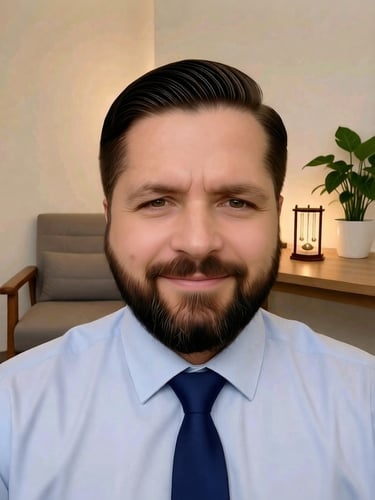
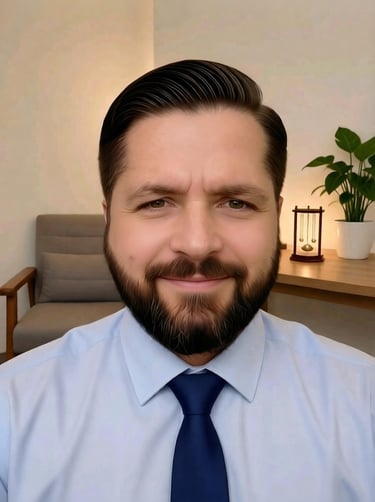
My name is David Chmielewski, a hypnotherapist by nature, at heart and by choice. I believe that real change starts with genuine connection. My mission is to help you sync your mind and rediscover your inner strength through compassionate, expert-led hypnotherapy.
I am qualified hypnotherapist holding a Diploma in Hypnotherapy (DHP Acc.Hyp.) and is a Full Member of the Professional Hypnotherapy Practitioner Association (PHPA), an organisation whose members are committed to high professional standards, ethical practice, and continued professional development.