YOUR TRUSTED SOURCE FOR HYPNOSIS, HYPNOTHERAPY AND PERSONAL GROWTH INSIGHTS

The Sleep Architecture Changes Hypnosis Makes That No Sleep Supplement Can
What if the real problem isn’t that you can’t sleep… but that your brain never reaches the right kind of sleep? Most sleep supplements help with drowsiness. Hypnosis appears to do something far stranger: it changes the internal architecture of sleep itself — increasing deep slow-wave activity linked to recovery, memory, and brain restoration. The difference between being unconscious… and being neurologically restored… is bigger than most people realize.
HYPNOSIS
David C
5/9/20268 min read


The Sleep Architecture Changes Hypnosis Makes That No Sleep Supplement Can
Melatonin adjusts your clock. Magnesium relaxes your muscles. But neither — nor anything else on a supplement shelf — can do what hypnosis does to the internal structure of your sleep. Here's the science they don't put on labels.
Sleep Isn't an Event. It's Architecture.
Most people think of sleep as a single thing. You close your eyes, drift away, wake up. Done.
Sleep scientists see something completely different.
When they attach electrodes to a sleeping brain, they see structure. Precise, cyclical, purposeful architecture — as deliberate in its design as a cathedral and infinitely more complex in its function.
Sleep architecture is the pattern, sequence, and proportion of sleep stages your brain moves through each night. Not just how long you sleep — but what kind of sleep you get, in what order, and in what depth.
And here's what the supplement industry quietly avoids:
Most sleep supplements don't touch your sleep architecture at all.
They might help you fall asleep faster. But the internal structure of your sleep — the ratio of deep sleep to light sleep, the density of sleep spindles, the amplitude of slow waves — remains largely unchanged.
Hypnosis, however, reaches inside that structure and rewires it from the inside out.
Not metaphorically. Measurably. On an EEG.
The Map of a Night's Sleep
A healthy adult moves through 4–6 complete sleep cycles per night, each lasting roughly 90 minutes. Each cycle contains four distinct stages:
N1 — The Gateway (5% of sleep)
The hypnagogic border between waking and sleep. Theta waves dominate. This is the state Edison and Dalí famously harvested for creative breakthroughs.
N2 — The Organizer (45–55% of sleep)
Where sleep spindles fire — rapid 12–15 Hz bursts of neural activity that transfer memories from the hippocampus to the cortex for long-term storage. More spindles = better learning, sharper cognition, higher fluid intelligence.
N3 — The Restorer (15–25% of sleep)
Slow-wave sleep. The holy grail. Large, synchronized delta waves sweep the cortex. Growth hormone releases. Immune function peaks. Physical and cognitive restoration happens here. This is the stage most devastated by stress, alcohol, and aging.
REM — The Synthesizer (20–25% of sleep)
Your brain runs nearly as hot as when you're awake. Emotional memories are processed. Distant concepts are linked in novel ways. Creativity, emotional regulation, and personality integration all depend on healthy REM.
The architecture of these stages — their depth, proportion, and sequence — determines whether you wake restored or wrecked.
What Supplements Actually Do (And Don't)
To be fair: several supplements have real science behind them. But their mechanisms reveal their limits.
Melatonin signals circadian timing — it tells your brain it's nighttime. Multiple meta-analyses confirm it improves how fast you fall asleep. It does not meaningfully alter slow-wave sleep or REM architecture.
Magnesium activates GABA receptors and promotes relaxation. In deficient individuals, it may modestly improve deep sleep. In people who aren't deficient, architectural effects are marginal.
Ashwagandha reduces cortisol and blunts the stress response. It works on the conditions surrounding sleep — not sleep architecture itself.
Prescription Z-drugs (Ambien, etc.) are worth noting here because they reveal something important: even powerful sedatives that knock you unconscious actually suppress slow-wave sleep and REM — producing sedation rather than restorative sleep architecture. Many people on sleep medication sleep 8 hours and wake exhausted for exactly this reason.
> "Melatonin's effect on sleep architecture is modest at best. It's primarily a chronobiotic — a timing drug — not a sleep quality drug."
> — Dr. Matthew Walker, UC Berkeley
The core problem: sleep architecture is governed by neural circuit behavior — not simple chemistry. And you cannot take a circuit pill.
What Hypnosis Does That Nothing Else Can
In 2014, researchers at the University of Zurich published one of the most remarkable studies in sleep science history.
They had participants take a 90-minute nap while EEG monitored their brain activity. One group listened to a hypnotic induction audio as they fell asleep. The other listened to neutral spoken text.
The results stopped the field cold.
The hypnosis group spent 80% more time in slow-wave sleep.
Eighty percent.
They also showed reduced light sleep and no disruption to REM — meaning hypnosis wasn't just shuffling time between stages randomly. It was specifically and precisely enhancing the most restorative sleep stage while preserving the rest of the architecture.
Achieved by audio. Played once. As they fell asleep.
> "Our results suggest that hypnotic suggestions given prior to sleep can increase slow-wave sleep without affecting other sleep stages — this is a highly specific effect."
> — Dr. Maren Cordi, University of Zurich
Why Hypnosis Can Do What Supplements Can't
The answer lies in what sleep architecture is actually controlled by.
Most supplements target the two-process model of sleep — either adenosine buildup (sleep pressure) or circadian timing. These are the chemical levers of sleep onset.
But sleep architecture — the internal stage structure — is regulated by thalamo-cortical neural circuits. Sleep spindles are generated by thalamo-cortical loops. Slow waves are generated by cortical down-states synchronized by the hippocampus. REM is controlled by cholinergic neurons in the brainstem.
These are circuit-level behaviors. They respond to neurological state — not molecular concentration.
And hypnosis changes neurological state at the circuit level.
Brain imaging studies from Stanford, Harvard, and multiple European research centers show that during hypnosis:
- Theta wave activity increases — the same dominant frequency of deep slow-wave sleep, directly priming the circuits that generate it
- The Default Mode Network quiets — reducing the rumination and self-referential chatter that fragment deep sleep
- Thalamo-cortical communication shifts — in patterns that parallel the shifts seen during N3 sleep itself
- Cortisol drops rapidly — a 2021 study in Frontiers in Psychology showed a single 20-minute hypnotic induction produced cortisol reductions comparable to weeks of mindfulness training
That last point matters enormously. Cortisol is the single most destructive force acting on sleep architecture in modern humans. Even modest evening cortisol elevation — from checking email, watching news, or a difficult conversation — measurably suppresses slow-wave sleep. Hypnosis dismantles that suppression faster than anything else studied.
"Hypnosis doesn't sedate the brain. It changes the mode of the brain — and that mode is far more conducive to restorative sleep than the anxious, hyperactivated state most people carry into bed."
Sleep Spindles: The Hidden Target
Sleep spindles deserve special attention because they're among the most scientifically significant and least publicly discussed elements of sleep architecture.
These 12–15 Hz bursts of neural activity — found exclusively in N2 sleep — are the primary mechanism of memory consolidation. Studies show people with higher spindle density have higher IQ scores, learn new skills faster, and recover cognitive performance after sleep deprivation more effectively.
A 2020 study in Scientific Reports found that hypnotic suggestion altered sleep spindle density, amplitude, and duration in ways that correlated with improved next-day cognitive performance.
No supplement has ever demonstrated this.
Because spindles are a neural circuit behavior. You cannot take a spindle pill. Hypnosis influences the thalamo-cortical networks that generate them. Molecules — at least currently available ones — do not.
Clinical Evidence: Hypnosis Healing Damaged Architecture
The most compelling evidence comes from clinical populations whose sleep architecture has been severely disrupted.
Fibromyalgia patients characteristically show alpha wave intrusion into N3 sleep — waking-brain activity contaminating deep sleep, producing exhaustion regardless of sleep duration. Multiple controlled studies show hypnosis reduces this anomaly, producing measurable increases in clean slow-wave sleep and corresponding improvements in pain and cognitive function.
PTSD is fundamentally a disorder of disrupted REM architecture — fragmented cycles, nightmares, sleep stage instability. Clinical hypnosis has demonstrated the ability to stabilize REM architecture and restore normal sleep stage cycling in trauma populations, with results published in the International Journal of Clinical and Experimental Hypnosis.
Chronic insomnia shreds sleep architecture across all stages. Research shows that adding hypnosis to Cognitive Behavioral Therapy for Insomnia (CBT-I) produces faster architectural normalization than behavioral intervention alone.
Three Protocols to Restructure Your Sleep Tonight
Protocol 1: The Architecture Primer (Nightly, 15 minutes)
Step 1 — Worry Dump (3 minutes)
Write every unresolved concern from the day. Research by Dr. Michael Scullin (Baylor University) shows this significantly improves slow-wave sleep by offloading rumination. You're not solving — you're acknowledging and setting aside.
Step 2 — 4-7-8 Breathing (4 minutes)
Inhale 4 seconds, hold 7, exhale 8. This breathing pattern shifts brainwave activity toward theta and activates vagal tone — directly suppressing cortisol and priming thalamo-cortical circuits for slow-wave generation.
Step 3 — Hypnotic Suggestion (8 minutes)
In bed, eyes closed, in a calm inner voice:
*"My mind and body grow heavier with every breath. As I drift toward sleep, my brain moves into its deepest, most restorative rhythms. My slow waves grow stronger and more synchronized. Every cell is being restored. I wake refreshed and clear."*
Repeat the core suggestion 3 times. Then breathe and release.
Protocol 2: The REM Restoration Protocol (For Stress Recovery)
Use this when you've been under significant stress or notice emotional reactivity.
Step 1 — Emotional Labeling Journal (8 minutes)
Write what you're feeling without judgment or problem-solving. Labeling emotions in writing reduces amygdala hyperactivity (demonstrated in fMRI research by Dr. Matthew Lieberman, UCLA) — directly reducing the arousal that suppresses REM.
Step 2 — REM Priming Suggestion (7 minutes)
*"As I sleep tonight, my mind gently and safely processes everything I've experienced. With each dream cycle, my emotional world becomes clearer and more integrated. I wake with perspective, resilience, and calm."*
Protocol 3: The Spindle Enhancer (Before Learning or Performance)
Use before sleep following a study session, skill practice, or important preparation.
Step 1 — Memory Tagging (3 minutes)
Write the 3–5 most important things you learned today. Read them aloud once. You're creating a consolidation agenda for your sleeping brain.
Step 2 — Consolidation Suggestion (5 minutes)
*"As I sleep, my brain deeply encodes everything I learned today. The knowledge becomes permanent, clear, and easily accessible. When I wake, I have this with confidence and ease."*
The Honest Comparison
| Intervention | Sleep Onset | Slow-Wave Sleep | Sleep Spindles | REM Architecture | Cortisol Reduction |
|---|---|---|---|---|---|
| Melatonin | Moderate | Minimal | None | Minimal | None |
| Magnesium | Modest | Modest (if deficient) | None | Minimal | Modest |
| Ashwagandha | Modest | Minimal | None | Minimal | Moderate |
| Prescription Z-drugs | Strong | Suppresses | Disrupts | Suppresses | None |
| Hypnosis | Strong | +80% documented | Enhanced | Supports | Rapid, strong |
The Paradigm Shift
The supplement industry is built on a compelling and deeply flawed premise: that sleep is primarily a chemical event, and the right molecules will produce the right sleep.
Chemistry matters. But sleep architecture is ultimately a neurological state governed by circuit-level brain activity. And you cannot reliably restructure circuit-level brain activity with a pill.
You can do it with a state.
Hypnosis is the most researched, most measurable, most direct method humans have discovered for deliberately shifting the brain into states that produce profound, lasting improvements in sleep architecture.
This isn't mysticism. This isn't alternative medicine.
This is peer-reviewed, EEG-confirmed, mechanism-explained neuroscience.
"We are at the beginning of understanding how much voluntary control humans can exercise over brain states previously thought to be entirely automatic. Sleep architecture is not fixed. It is far more malleable than we imagined."
— Emerging consensus across sleep neuroscience research, 2020–2024
Tonight's Choice
You're going to sleep tonight regardless.
The question is what kind of sleep you'll build — architecturally rich, with deep slow waves and dense spindles and complete REM cycles? Or shallow, fragmented, and chemically masked by substances that don't touch the underlying structure?
The architecture of tonight's sleep influences tomorrow's cognition, this week's emotional resilience, and this year's brain health trajectory.
No supplement label carries that weight.
Your own mind does.
Use it.
"You can supplement your way to sleep. You cannot supplement your way to sleep architecture."
"The EEG doesn't lie. Hypnosis produces architectural changes the entire supplement industry combined cannot replicate."
"Your brain knows how to build perfect sleep. Hypnosis removes what's getting in the way."
#SleepArchitecture #Hypnosis #SleepScience #DeepSleep #SleepSpindles #REMSleep #BrainHealth #SleepOptimization #BeyondMelatonin #NeuroscienceOfSleep #SlowWaveSleep #SleepQuality #HypnoticSleep #CognitivePerformance #MindBodyScience #SleepResearch #HealthOptimization #BrainWaves #SleepVsSupplements #RestorativeSleep
Key Sources: University of Zurich (Sleep, 2014) | Stanford Neuroimaging Lab | UC Berkeley Sleep Center | Frontiers in Psychology (2021) | Scientific Reports (2020) | International Journal of Clinical and Experimental Hypnosis | Matthew Walker, Why We Sleep
©2026 HypnoSyncSpace. All rights reserved.
HypnoSyncSpace is based in Bristol, United Kingdom
davidc@hypnosync.space
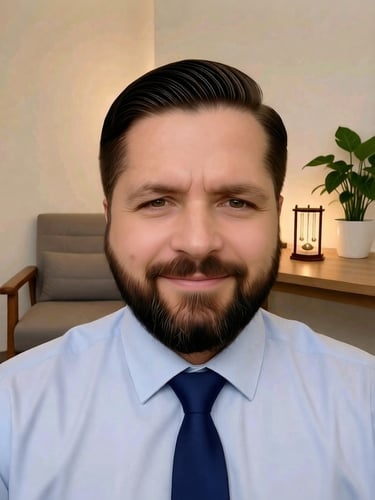
My name is David Chmielewski, a hypnotherapist by nature, at heart and by choice. I believe that real change starts with genuine connection. My mission is to help you sync your mind and rediscover your inner strength through compassionate, expert-led hypnotherapy.
I am qualified hypnotherapist holding a Diploma in Hypnotherapy (DHP Acc.Hyp.) and is a Full Member of the Professional Hypnotherapy Practitioner Association (PHPA), an organisation whose members are committed to high professional standards, ethical practice, and continued professional development.