YOUR TRUSTED SOURCE FOR HYPNOSIS, HYPNOTHERAPY AND PERSONAL GROWTH INSIGHTS


THE SNAP INDUCTION: Can a Single Snap of the Fingers Really Drop Someone Into Trance?
It looks like a magic trick. One sharp snap and a person collapses into immediate, total trance. The audience laughs nervously and assumes it is theatre. But in laboratories studying the acoustic startle reflex, in neuroscience papers on conditioned response, in the clinical notes of the most brilliant hypnotherapist who ever lived — the same truth keeps surfacing. The snap is real. And the reason it works has nothing to do with the sound and everything to do with what the nervous system has been taught to do when it hears it. What Pavlov proved with a bell, Erickson perfected with a finger. And what you are about to learn is how to build that same wire inside your own nervous system — and carry the most powerful trance trigger ever discovered everywhere you go.
David C
4/20/20268 min read

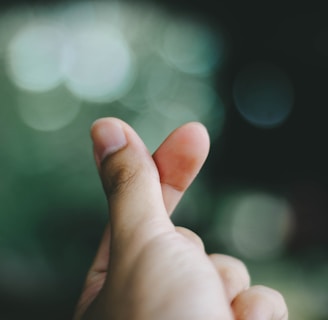
THE SNAP INDUCTION: Can a Single Snap of the Fingers Really Drop Someone Into Trance?
It sounds like a magic trick. The neuroscience behind it is even more fascinating.
You have seen it a hundred times.
The hypnotist raises a hand.
The subject's eyes are open, focused, waiting.
One sharp snap.
And they are gone.
Head dropping. Eyes closing. Body collapsing forward into immediate, total trance.
You assumed it was theatre.
You assumed it was a performance.
You assumed the subject was playing along.
You were wrong.
---
## WHERE IT ALL BEGAN
The snap induction is not a modern invention.
Its roots stretch back to the earliest documented uses of surprise as a hypnotic trigger — to James Braid's observations about sudden sensory stimuli in the 1840s, to the stage hypnotists of the Vaudeville era who discovered that sharp auditory shocks could collapse conscious resistance faster than any spoken induction.
But the snap as a refined, clinical tool is most closely associated with three names.
The first is Milton Erickson — who understood better than anyone that the conscious mind's greatest vulnerability was not exhaustion or relaxation but surprise. A stimulus so sudden, so unexpected, so precisely timed that the analytical mind had no opportunity to prepare a defense.
The second is Ormond McGill — the dean of American stage hypnosis — who documented and systematized the snap as part of a broader framework of shock inductions through forty years of performance and clinical practice.
The third is the generation of NLP practitioners who followed — Richard Bandler, John Grinder and their students — who mapped the neurological architecture of the snap response with the precision that transformed it from a stage trick into a clinical instrument.
What all three discovered, independently and through different routes, was the same fundamental truth:
The snap does not hypnotize anyone.
The expectation, the pattern interrupt, the startle response and the trained neurological association that has been built into that sound — those are what hypnotize.
The snap is simply the trigger.
And what it fires is already loaded.
(McGill, O. — "The New Encyclopedia of Stage Hypnosis," 1996)
(Bandler & Grinder — "Patterns of the Hypnotic Techniques of Milton H. Erickson," 1975)
(Erickson, M.H. — "The Collected Papers," 1980)
WHAT'S ACTUALLY HAPPENING IN YOUR BRAIN
When a trained snap induction fires, six precise neurological events occur within milliseconds:
The Acoustic Startle Reflex — The snap produces a sharp, transient sound pressure wave. The auditory brainstem responds to this faster than any other sensory system in the body — in 8 to 12 milliseconds, before the cortex has processed what it heard. This is the acoustic startle reflex — one of the most primitive and unkillable responses in the human nervous system. It cannot be suppressed by willpower, intelligence or scepticism. It fires first. Always. (Davis, 1984)
The Orienting Response Cascade — Immediately following the startle, the orienting response fires — redirecting every neural resource toward the source of the unexpected stimulus. Prefrontal executive function drops. The analytical gatekeeper goes offline. The subconscious stands completely unguarded for a window of one to four seconds. (Sokolov, 1963)
Conditioned Neurological Association — This is the key mechanism that separates the snap induction from a simple startle. In trained subjects — people who have experienced hypnosis before and have the snap paired repeatedly with entering trance — the sound has become a conditioned stimulus. The nervous system has learned, through repetition, that snap equals trance. The response is no longer just surprise. It is Pavlovian. It is wired. (Pavlov, 1927)
The Expectation Loop — Even in first-time subjects, the expectation architecture built in the moments before the snap does enormous work. When someone is told, clearly and specifically, that the snap will send them into immediate deep trance — and they believe it even partially — their nervous system begins preparing the trance state before the snap fires. The snap simply releases a trigger that the expectation has already cocked. (Kirsch, 1999)
Motor System Shutdown — The startle reflex is followed immediately by a global inhibition of voluntary motor activity — a freeze response inherited from prey animals whose survival depended on sudden stillness. In a safe, trusted hypnotic context, this freeze does not resolve into fight or flight. It resolves into collapse — the complete release of postural muscle tone that produces the dramatic physical drop seen in stage demonstrations. (Porges, 2011)
Rapid State Transfer — In subjects who have been in trance before, the nervous system has a memory of the state. The snap, in the right context, does not create trance from scratch. It recalls it — the way a smell recalls a memory, or a song recalls an emotion. The trance is not built. It is retrieved. At the speed of association. (Erickson & Rossi, 1979)
THE FIVE PILLARS — What Makes It Work
| Pillar | Why It Matters |
|--------|----------------|
| Prior trance experience — subject has been in trance before | Gives the nervous system a state to retrieve, not build |
| Conditioning — snap paired with trance repeatedly | Transforms surprise into Pavlovian trigger |
| Expectation — clear, specific pre-snap suggestion | Loads the neurological response before the trigger fires |
| Confidence — absolutely no hesitation in delivery | Any uncertainty telegraphs to the subconscious and breaks the pattern |
| Context — subject is seated, safe and positioned correctly | Physical safety allows the motor collapse to complete fully |
HOW TO DO IT: Three Core Methods
METHOD 1: THE SELF-CONDITIONING SNAP (Building the Trigger — Solo)
You need: Your fingers. An established trance state from any previous induction.
The snap induction cannot be built in a single session. It is conditioned over time. This is how you build it.
Phase 1 — Association (Week 1–2):
Enter trance using any reliable induction you have already established — eye roll, arm drop, coin drop, progressive relaxation.
Once you are in a clear, stable trance state — at the moment of deepest relaxation — snap your fingers once.
Narrate internally immediately after:
"This sound means this state. Every time I hear this snap — or produce this snap — I return immediately and completely to exactly this depth."
Hold the association for 30 seconds. Let it saturate.
Emerge deliberately. Count 1 to 5, eyes open, fully alert.
Phase 2 — Testing (Week 2–3):
After emerging from trance — wait 10 minutes. Then snap once.
Notice what happens. Even partial return of the trance state is success. The conditioning is beginning to wire.
Repeat the association phase and the test phase every session.
Phase 3 — Firing (Week 3 onward):
The conditioned snap becomes functional when you can snap your fingers in a neutral waking state and feel the trance state arrive clearly within 3 to 5 seconds.
When this happens — you have built one of the most powerful, portable and discrete trance triggers available.
A single snap. Anywhere. Anytime. In any circumstances.
METHOD 2: THE PRE-LOADED SNAP INDUCTION (Full Protocol)
You need: A chair. A prior trance experience. The conditioned trigger from Method 1.
This is the complete self-induction using the snap as the primary trigger — once conditioning has been established.
1. Sit comfortably. Back supported. Feet flat. Hands on thighs.
2. Take three slow, deep breaths. With each exhale, allow your body to settle slightly heavier.
3. Build the expectation architecture internally — slowly, deliberately:
"In a moment I am going to snap my fingers once. The moment I hear that sound — my eyes will close immediately and completely. My body will release all tension at once. My mind will drop instantly to a depth that would normally take twenty minutes to reach. I know this because my nervous system knows this. The association is already there. The state is already loaded. The snap simply releases it."
4. Pause for 10 full seconds. Let the expectation build.
5. Raise your dominant hand.
6. Snap — sharp, clean, decisive.
7. Eyes close immediately on the sound. Body releases completely.
8. Narrate internally:
"Deep. Deeper. All the way down. Ten times deeper with every breath."
9. Remain in the trance state for as long as needed.
10. Emerge deliberately — count 1 to 5, eyes open on 5, fully alert.
Time: 30 seconds to full trance state once conditioning is established.
METHOD 3: THE RAPID DEEPENER SNAP (Advanced Fractionation)
You need: Any initial trance state, however light. The conditioned snap.
This method uses the snap not as a primary induction but as a fractionation deepener — multiplying the depth achieved by any other method.
1. Enter trance using your preferred induction. Even a very light state is sufficient.
2. Once in trance — snap once. Notice the immediate deepening.
3. Allow 30 seconds to settle into the new depth.
4. Snap again. Notice the deepening compound.
5. Repeat three to five times.
What you'll experience: Each snap in trance drops you measurably further than the last. The fractionation effect — exponential rather than linear deepening — combines with the conditioned trigger to produce somnambulistic depth within minutes of beginning.
After five cycles, most experienced practitioners report a quality of depth that is qualitatively different from anything achieved through relaxation-based methods alone. More immediate. More complete. More available.
ONCE YOU'RE IN THE STATE — What to Do
For instant anxiety interruption: The conditioned snap used in waking life — not to induce full trance but to trigger the parasympathetic cascade associated with trance — can interrupt an anxiety spiral in seconds. One snap. Breathe. The nervous system responds to the conditioned cue even at a partial level.
For stage fright and performance anxiety: Snap the trigger in the wings before you walk on. In the tunnel before you compete. Outside the door before you present. The nervous system does not distinguish between the practice environment and the performance environment. The snap fires the same state regardless of context.
For pain management: The deep somnambulistic state accessible through the rapid deepener snap is where pain dissociation becomes genuinely achievable. Erickson used conditioned auditory triggers extensively in his chronic pain work. The snap, once conditioned at depth, can create analgesic dissociation on demand.
For sleep: The conditioned snap used lying in bed, in darkness, with eyes closed, activates a trance state that slides seamlessly into sleep. Most practitioners with a well-established snap trigger report falling asleep within 90 seconds of firing it in a sleep context.
YOUR 3-WEEK PRACTICE PLAN
Week 1: Daily trance sessions using any established induction — snap fingers once at peak depth and narrate the association. No testing yet. Pure conditioning. Building the neurological wire before asking it to carry current.
Week 2: Continue daily conditioning sessions. Begin testing — snap 10 minutes after emerging from trance and observe. Document what happens. Partial return is success. Full return means the wire is already carrying current.
Week 3: Begin using the Pre-Loaded Snap Induction as your primary method. Test the Rapid Deepener. Begin applying the snap in real-world contexts — not for full trance but for the partial calming cascade that the conditioned trigger produces even in waking states.
After three consistent weeks, the snap is no longer a technique. It is a reflex. One that belongs entirely to you — portable, private, immediate and extraordinarily precise.
SAFETY FIRST
The partner version of the snap induction must only ever be used with full, explicit, informed consent — always, without exception
Never attempt to snap-induce an unconditioned person — the startle without prior trance association will produce nothing useful and may produce distress
Always ensure the subject is seated safely before any snap induction — the motor collapse can be dramatic in well-conditioned subjects
Always emerge deliberately — count 1 to 5, eyes open, fully alert, before standing or moving
If the conditioned snap fires unexpectedly in an inappropriate context — ground yourself immediately, stand up, move your body, and review when and where you are practising the conditioning
THE BOTTOM LINE
A snap is nothing.
It is air pressure. A transient acoustic event lasting less than a tenth of a second. Physically — it is almost nothing.
But inside a conditioned nervous system?
It is the most efficient trance trigger ever discovered.
Not because the sound has any intrinsic hypnotic property.
But because the human nervous system is the most sophisticated pattern-recognition and conditioned-response machine that has ever existed. It learns. It associates. It wires experience into reflex with a speed and permanence that the conscious mind cannot approach.
Pair a sound with a state, repeatedly, with intention and precision — and the sound becomes the state.
Every. Single. Time.
This is what stage hypnotists stumbled upon on Vaudeville stages.
This is what Pavlov proved in his laboratory.
This is what Erickson refined into clinical precision.
This is what every brain science laboratory studying conditioned responses has confirmed again and again.
The snap is not magic.
It is simply neuroscience.
Running at the speed of sound.
And landing somewhere far deeper than thought can follow.
Key Sources: Erickson (1980) • McGill (1996) • Bandler & Grinder (1975) • Davis (1984) • Sokolov (1963) • Pavlov (1927) • Kirsch (1999) • Porges (2011) • Erickson & Rossi (1979)
#Hypnosis #SnapInduction #MiltonErickson #OrmondMcGill #NLP #ConditionedResponse #SelfHypnosis #Neuroscience #SubconsciousMind #ThetaWaves #HypnoticInduction #AlteredStates #MentalHealth #SelfDevelopment #AcousticStartle #HypnotherapyTechniques #MindBodyConnection #ConsciousnessStudies #LearnHypnosis #RapidInduction
Save this. Try it tonight. Share it with the person who thinks the snap is just a stage trick. Every reflex was once a choice made often enough to become automatic. Build the wire. Then watch what a single sound can do.
©2026 HypnoSyncSpace. All rights reserved.
HypnoSyncSpace is based in Bristol, United Kingdom
davidc@hypnosync.space


My name is David Chmielewski, a hypnotherapist by nature, at heart and by choice. I believe that real change starts with genuine connection. My mission is to help you sync your mind and rediscover your inner strength through compassionate, expert-led hypnotherapy.
I am qualified hypnotherapist holding a Diploma in Hypnotherapy (DHP Acc.Hyp.) and is a Full Member of the Professional Hypnotherapy Practitioner Association (PHPA), an organisation whose members are committed to high professional standards, ethical practice, and continued professional development.