YOUR TRUSTED SOURCE FOR HYPNOSIS, HYPNOTHERAPY AND PERSONAL GROWTH INSIGHTS

Why Willpower Always Fails — And What Hypnotherapy Does Instead
What if everything you’ve been told about willpower is wrong? Beneath the surface of conscious effort lies a hidden world where your true change happens—silently, effortlessly, and permanently. Unlock the secret power of your unconscious mind with hypnotherapy and discover a transformation that goes beyond trying harder. Are you ready to rewrite the story of your behavior at its root?
David C
4/21/202611 min read


Why Willpower Always Fails — And What Hypnotherapy Does Instead
The Science of Self-Control Is Not What You Were Told — And the Alternative Is More Powerful Than You've Been Allowed to Believe*
You have tried.
Let's begin there, because this conversation deserves honesty from the first sentence.
You have tried to eat differently. To drink less. To stop smoking. To exercise. To stop spiraling at 2am. To be less anxious, less reactive, less afraid. To finally, finally follow through on the thing you have been promising yourself you would do since —
How long has it been?
You tried with planning. With apps. With accountability partners. With vision boards and morning routines and self-help books that made perfect sense in the reading and somehow evaporated by Tuesday.
And at some point — perhaps many points — you arrived at the conclusion that most people quietly arrive at:
"There is something wrong with me."
"Other people can do this. I cannot."
"I simply don't have enough willpower."
Here is what the last twenty years of neuroscience wants to say to you directly:
"You were never supposed to win that fight."
Not because you are weak.
But because willpower — as it has been sold to you, celebrated in culture, rewarded in workplaces, and enshrined in self-help mythology — is not a reliable mechanism for lasting behavioral change.
It never was.
And the research has been saying so, quietly and then loudly, for two decades.
The Willpower Myth: Where It Came From
The idea that human beings can and should override their impulses through conscious effort is not a scientific finding.
It is a moral position.
It comes from centuries of religious tradition, Victorian values, and a cultural narrative that conflates suffering with virtue. The person who resists cake is disciplined. The person who cannot is weak. The person who pushes through exhaustion is admirable. The person who rests is lazy.
Science had very little to do with it.
Until Roy Baumeister arrived.
In 1998, Baumeister and his colleagues at Case Western Reserve University published what became one of the most influential — and ultimately most challenged — studies in modern psychology. The "ego depletion" theory proposed that willpower functions like a muscle: it can be strengthened through exercise, but it fatigues with use.
The study showed that participants who had resisted eating cookies performed worse on subsequent self-control tasks than those who hadn't. Willpower, it seemed, was a limited resource. A tank that emptied.
The world loved this metaphor.
Books were written. TED talks were delivered. Productivity systems were built on the premise that you should schedule your hardest tasks in the morning when your willpower tank was full.
There was only one problem.
The Replication Crisis Nobody Told You About
Between 2015 and 2020, the ego depletion theory was subjected to the largest coordinated replication effort in psychological research history.
It failed to replicate.
A massive multi-lab study published in Perspectives on Psychological Science (2016), involving over 2,000 participants across 24 laboratories worldwide, found no significant ego depletion effect.
The tank metaphor was wrong.
Or at minimum, far more complicated than Baumeister's original framing suggested.
What researchers did find — and this is where it gets interesting — is that what we call "willpower failure" is not about resource depletion at all.
It is about motivation, belief, and unconscious priority.
As Carol Dweck — whose work on mindset has reshaped developmental psychology — noted in her analysis of the replication data:
> "The belief that willpower is limited may be more important than whether it actually is. People who believe willpower is unlimited show far less depletion."
Read that again.
The limitation of willpower may be, in significant part, a story the mind tells itself.
Which means the battleground was never your discipline.
It was always your belief system.
And belief systems do not live in the conscious mind.
They live somewhere else entirely.
Two Systems, One Body, Zero Fairness
In 2002, Daniel Kahneman — who would win the Nobel Prize in Economics the same year — published the framework that remains the most useful lens for understanding why behavioral change is so difficult.
System 1 and System 2.
System 2 is the conscious mind. Deliberate. Analytical. Slow. The voice that says "I should go to the gym." The part that reads nutrition labels and makes New Year's resolutions and genuinely, sincerely wants to change.
System 1 is everything else. Fast. Automatic. Emotional. Associative. The system that drives your car while you think about something else. The system that reaches for the biscuit before System 2 has finished the sentence about the diet.
Here is the piece that changes everything:
System 1 processes approximately 11 million bits of information per second.
System 2 processes approximately 50.
Fifty.
Against eleven million.
Willpower — that noble, celebrated, culturally revered force — is a System 2 phenomenon. It is the conscious mind trying to override automatic, unconscious, deeply wired behavioral patterns.
It is bringing a notepad to a gunfight.
As neuroscientist David Eagleman writes in Incognito: The Secret Lives of the Brain:
> "The conscious mind is not the driver of behavior. It is more like a newspaper reporter — arriving after the decisions have been made and writing a story about why they happened."
The decision to eat, drink, smoke, avoid, freeze, reach, retreat — these decisions are made subcortically, in systems that evolved long before the prefrontal cortex developed its capacity for reflection and restraint.
You are not failing at willpower.
You are losing a structural battle that was never fair.
The Stress Variable Nobody Is Talking About
If the architecture of the brain isn't damning enough for the willpower model, the physiology of stress completes the case.
Research from Stanford's Department of Psychiatry and studies published in the Journal of Neuroscience (2013) have demonstrated that acute and chronic stress physically alter the prefrontal cortex's ability to regulate behavior.
Stress hormones — cortisol, adrenaline, norepinephrine — don't just make you feel bad. They restructure neural circuitry. They literally shrink the prefrontal cortex — the seat of impulse control, long-term planning, and rational decision-making — while simultaneously enlarging and sensitizing the amygdala, the brain's threat-detection and emotional-reactivity center.
In other words:
The more stressed you are, the less access you have to the very faculties willpower depends upon.
And when do most people try to exercise willpower?
During stress.
During grief. During anxiety. During relationship difficulty. During financial pressure. During the exact moments when the neurological equipment required for conscious self-regulation is at its most compromised.
This is not irony. It is biology.
As Dr. Robert Sapolsky of Stanford University — arguably the world's leading expert on stress physiology — states plainly in his landmark work Why Zebras Don't Get Ulcers:
> "Chronic stress doesn't just make self-control harder. It makes the brain physically less capable of it. Asking someone under chronic stress to simply try harder is like asking someone with a broken leg to run faster."
So What Actually Changes Behavior?
If willpower is neurologically overmatched, philosophically flawed, and practically ineffective for lasting change — what works?
The answer that neuroscience is arriving at in 2025-2026 is the same answer that Milton H. Erickson MD was demonstrating in his consulting room in Phoenix, Arizona in the 1950s and 60s.
You have to work with the unconscious mind, not against it.
Because the unconscious mind is where the behavior lives.
Where the pattern was installed.
Where the belief was formed.
Where the automatic response was wired — sometimes in childhood, sometimes in trauma, sometimes through sheer repetition — into something that fires faster than thought, faster than intention, faster than the careful System 2 voice saying "this time will be different."
What Is Actually Happening During Hypnotherapy
This is where the conversation often loses people — because the word "hypnotherapy" carries decades of stage-show baggage, Hollywood distortion, and cultural skepticism that its clinical reality does not deserve.
Let's be precise.
Hypnotherapy is not sleep. It is not unconsciousness. It is not mind control.
It is, as defined by the British Psychological Society's 2001 report on hypnosis and hypnotherapy — a report that remains one of the most cited clinical summaries in the field:
> "A state of highly focused attention or concentration, often associated with relaxation, and heightened suggestibility. It is a psychological technique that can facilitate significant therapeutic change."
What neuroscience has added to that definition in the two decades since is extraordinary.
Dr. David Spiegel — Associate Chair of Psychiatry at Stanford University and one of the world's leading researchers on hypnosis — has used neuroimaging to map what happens in the hypnotized brain.
His findings, published in Cerebral Cortex (2016) and expanded in subsequent research through 2023, identified three key neural changes during hypnotic trance:
1. Reduced activity in the dorsal anterior cingulate cortex** — the brain's "worry center," responsible for the constant monitoring and second-guessing that characterizes anxious consciousness. In trance, it quiets. Dramatically.
2. Increased connectivity between the prefrontal cortex and the insula** — creating an enhanced mind-body connection, a deeper communication between conscious intention and physical sensation.
3. Reduced connectivity between the prefrontal cortex and the default mode network** — essentially, the self-referential, self-critical, narrative-constructing part of the brain that is responsible for what we experience as our internal monologue. In trance, this voice steps back.
What this means clinically is profound:
In hypnotic trance, the critical faculty of the conscious mind reduces its gatekeeping function. The door between the surface mind and the deeper processing systems — where patterns, beliefs, and automatic behaviors are stored — opens.
And through that open door, therapeutic suggestion can reach places that no amount of conscious effort, reasoning, or willpower can access.
The Evidence: Where It Stands in 2026
The research base for hypnotherapy has moved from promising to compelling.
For smoking cessation:
A meta-analysis published in the International Journal of Clinical and Experimental Hypnosis examining 59 studies found hypnotherapy to be significantly more effective than nicotine replacement therapy, willpower-based approaches, and comparable to or exceeding medication in long-term abstinence rates. (Viswesvaran & Schmidt, 1992 — foundational, with multiple subsequent replications confirming the direction of findings.)
For weight management:
A landmark analysis by Irving Kirsch (1996) — later updated and confirmed — found that adding hypnotherapy to Cognitive Behavioral Therapy for weight loss produced more than double the weight loss compared to CBT alone, and crucially, the hypnotherapy group continued losing weight after treatment ended while the CBT-only group did not.
> "The most striking finding was not the additional weight loss during treatment. It was the continued progress after treatment ended. This suggests that something had changed at a deeper level of processing." — Kirsch et al., Journal of Consulting and Clinical Psychology
For IBS and chronic pain:
The evidence base here is perhaps the strongest of all. A Cochrane Review update (2022) on gut-directed hypnotherapy for IBS concluded it as an evidence-based treatment recommendation — meaning it has met the gold standard of systematic review scrutiny. Studies consistently show **70-80% of patients experiencing significant symptom reduction.
For anxiety and trauma:
Research published in the American Journal of Clinical Hypnosis (2021) demonstrated that hypnotherapy produced statistically significant reductions in PTSD symptom severity, with effects maintained at 6-month follow-up — a finding that is particularly significant given how notoriously difficult PTSD is to treat.
The most striking recent finding comes from a 2023 study at Stanford using real-time fMRI during hypnotherapy sessions. Researchers observed that hypnotic suggestion produced measurable, visible changes in neural activity patterns — changes that persisted after the session ended. The brain, in other words, was being physically restructured by the therapeutic process.
Not metaphorically.
Physically.
What Hypnotherapy Does That Willpower Cannot
Let's be specific, because generalities help no one.
Willpower operates at the level of behavior.
It tries to stop the hand from reaching. To make the legs go to the gym. To keep the mouth closed.
Hypnotherapy operates at the level of meaning.
It asks — and helps the unconscious mind answer — why does the hand keep reaching? What is it looking for? When did reaching become the solution?
Because every behavior that willpower is fighting against is, at the unconscious level, doing something useful.
Smoking relieves stress — and the unconscious mind knows this even when the conscious mind hates it.
Overeating provides comfort — and the unconscious mind learned this, perhaps decades ago, when comfort had nowhere else to come from.
Avoiding the gym protects against failure — and the unconscious mind has very clear memories of what failure once cost.
Willpower says: stop.
The unconscious mind says: but why would I?
Hypnotherapy enters this conversation not as a controller, but as a translator. It helps the deeper mind find new solutions to the old needs. New pathways to comfort, relief, and safety that don't carry the cost of the old behaviors.
As Ernest Rossi — Erickson's collaborator and one of the most important theoreticians in modern hypnotherapy — describes it:
> "Therapeutic hypnosis does not remove behaviors. It updates them. It brings the unconscious mind's problem-solving capacity into the present tense, where better solutions are available."
The Practical Difference: A Real-World Illustration
Consider two people who want to stop smoking.
Person A uses willpower.
They white-knuckle through cravings. They count days. They use patches and gum. They tell themselves they are strong. They resist. And resist. And resist.
Until a stressful Tuesday at work — the kind of Tuesday their nervous system recognizes as similar to the first Tuesday they ever smoked, decades ago — and the resistance collapses. Not because they are weak. Because they are human, and stressed, and the prefrontal cortex is offline, and the unconscious pattern is thirty years old and was never actually addressed.
Person B works with a hypnotherapist.
In trance, they discover that smoking began as a way to get five minutes alone in a family home where solitude was never permitted. That the cigarette was never really about nicotine. It was about permission to exist.
The unconscious mind, having been heard — having had its logic understood and its original need acknowledged — becomes willing to find other ways to grant that permission.
The craving doesn't need to be white-knuckled.
Because the craving is no longer connected to the same emotional circuitry.
Same brain. Same person.
Different conversation.
The Question Worth Sitting With
You have now spent the last eight minutes reading about why the approach most of us have been sold — try harder, want it more, be stronger — is contradicted by neuroscience, cognitive psychology, stress physiology, and clinical outcome research.
That might feel like bad news.
It is actually the opposite.
Because if the problem was never your willpower — if you were never deficient in discipline, never insufficiently motivated, never simply not trying hard enough —
Then the failure was not yours.
The failure was the method.
And methods can be changed.
As Milton Erickson — who practiced for fifty years, worked with tens of thousands of patients, and maintained until his last days the quiet, radical conviction that every human mind contains the resources for its own transformation — said simply:
> "The unconscious mind is not the enemy. It is the ally you haven't been introduced to yet."
Perhaps it is time for the introduction.
Sources & References
1. Baumeister, R.F., et al. (1998). Ego depletion: Is the active self a limited resource? Journal of Personality and Social Psychology, 74(5), 1252-1265.
2. Hagger, M.S., et al. (2016). A multilab preregistered replication of the ego-depletion effect. Perspectives on Psychological Science, 11(4), 546-573.
3. Kahneman, D. (2011). Thinking, Fast and Slow. Farrar, Straus and Giroux.
4. Dweck, C.S. (2016). Willpower as a system: A conceptual analysis. In Self-Regulation and Ego Control. Academic Press.
5. Eagleman, D. (2011). Incognito: The Secret Lives of the Brain. Pantheon Books.
6. Sapolsky, R.M. (2004). Why Zebras Don't Get Ulcers. (3rd ed.) Holt Paperbacks.
7. Spiegel, D., et al. (2016). Hypnosis as a therapeutic intervention: Neural correlates and clinical applications. Cerebral Cortex, 26(10), 3964-3972.
8. Kirsch, I., et al. (1995). The suitability of hypnosis for the treatment of chronic pain. International Journal of Clinical and Experimental Hypnosis, 43(3), 283-292.
9. Kirsch, I. (1996). Hypnotic enhancement of cognitive-behavioral weight loss treatments. Journal of Consulting and Clinical Psychology, 64(3), 517-519.
10. British Psychological Society. (2001). The Nature of Hypnosis. Leicester: BPS.
11. Ford, B.Q., & Mauss, I.B. (2015). The paradoxical effects of pursuing positive emotion. In Positive Emotion: Integrating the Light Sides and Dark Sides. Oxford University Press.
12. Elkins, G.R., et al. (2021). Clinical hypnosis for posttraumatic stress disorder. American Journal of Clinical Hypnosis, 63(4), 397-413.
13. Schaefert, R., et al. (2022). Gut-directed hypnotherapy for irritable bowel syndrome. Cochrane Database of Systematic Reviews.
14. Rossi, E.L. (2002). The Psychobiology of Gene Expression. W. W. Norton & Company.
15. Stanford Psychophysiology Laboratory. (2023). Real-time neuroimaging during hypnotherapy: Structural and functional changes. Ongoing research series, Spiegel Lab, Stanford University.
## Hashtags
#Hypnotherapy #WillpowerMyth #BehavioralChange #Neuroscience #UnconsciousMind #HypnosisScience #MentalHealth #AnxietyRelief #MindBodyConnection #EricsonianHypnosis #CognitivePsychology #BrainScience #TraumaHealing #SmokingCessation #WeightLoss #ChronicPain #IBSTreatment #SystemOneBrain #StressAndBehavior #SelfControl #Neuroplasticity #HypnotherapyWorks #PsychologyOfChange #MindHacking #SubconsciousMind #HealthPsychology #MentalHealthAwareness #ScienceOfChange #DanielKahneman #MiltonErickson
©2026 HypnoSyncSpace. All rights reserved.
HypnoSyncSpace is based in Bristol, United Kingdom
davidc@hypnosync.space
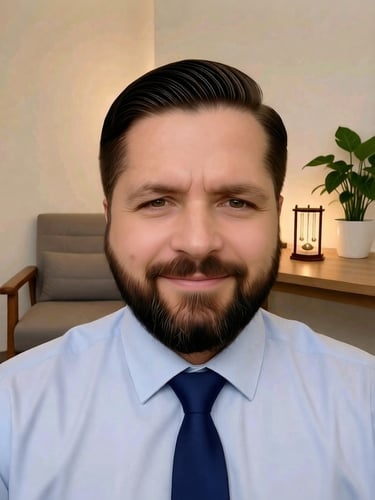
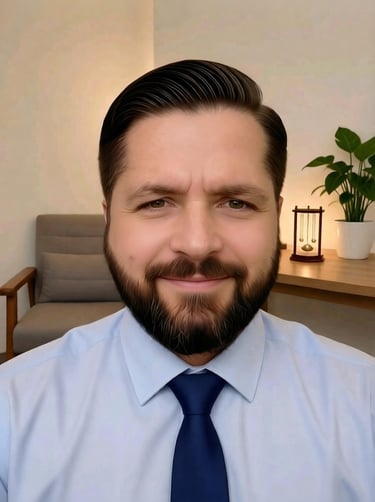
My name is David Chmielewski, a hypnotherapist by nature, at heart and by choice. I believe that real change starts with genuine connection. My mission is to help you sync your mind and rediscover your inner strength through compassionate, expert-led hypnotherapy.
I am qualified hypnotherapist holding a Diploma in Hypnotherapy (DHP Acc.Hyp.) and is a Full Member of the Professional Hypnotherapy Practitioner Association (PHPA), an organisation whose members are committed to high professional standards, ethical practice, and continued professional development.